1985 — Alabama State freestyle finals
Gregg Hosfeld and Willi Williams perform their finals routine. The recording’s description identifies their second-place finish.
1985 (event year) · 5:37
Historical competition footage published by gettybfree.
Visit the MuseumMuseum · Daily 10 a.m.–5 p.m.
CLASS OF
1987 PDGA Open world champion · 2008 & 2010 PDGA Grandmasters world champion · 2009 WFDF Disc Golf gold medalist
World champion, freestyle artist, journalist, photographer, traveling entertainer and course builder: Gregg Hosfeld stands among Florida’s most accomplished and versatile flying-disc athletes. His Builder legacy is central to that story—decades of media work that recorded and connected the sport, and Florida courses that brought it to new communities.
Biography · Career Record · Video Gallery · Photo Gallery · Museum Exhibit · Florida History · Related People
Gregg Hosfeld’s life in organized disc sports began in 1976, when he watched Jeff and Mark Watson perform a Frisbee halftime show at a Sarasota Sharks football game. In his 2022 Hall induction recollection, he credited neighbor Gary Getman with inviting him to see the brothers perform. Their freestyle skills made an immediate impression. After the show, Hosfeld approached them to talk Frisbee, and they invited him to join them playing Ultimate.
That invitation opened the door to Sunday practice and a new sporting community. Hosfeld joined Sarasota Ultimate, playing alongside Jeff and Mark Watson, P.J. Callender, Blue Ronk and Tim Willis. Freestyle, Ultimate, overall competition and Disc Golf grew together in this Sarasota circle, giving Hosfeld room to develop as both a competitor and a performer.
Hosfeld emerged from Sarasota having played alongside several future Hall of Famers. Jeff Watson, who would become the 1983 PDGA Open world champion, became one of his closest friends and most important influences. Those relationships helped shape the breadth of the career that followed. Decades later, Hosfeld, Watson and Willis entered the Florida Flying Disc Hall of Fame together in the Sarasota class of 2022.
That beginning helps explain the breadth of the career that followed. Hosfeld became an elite golfer without giving up the creative, cooperative and theatrical sides of disc play. His achievements place him among the strongest candidates for Florida’s most versatile flying-disc athlete: a world champion who could also build a freestyle routine, entertain an audience, write about the road and help a community create a course.
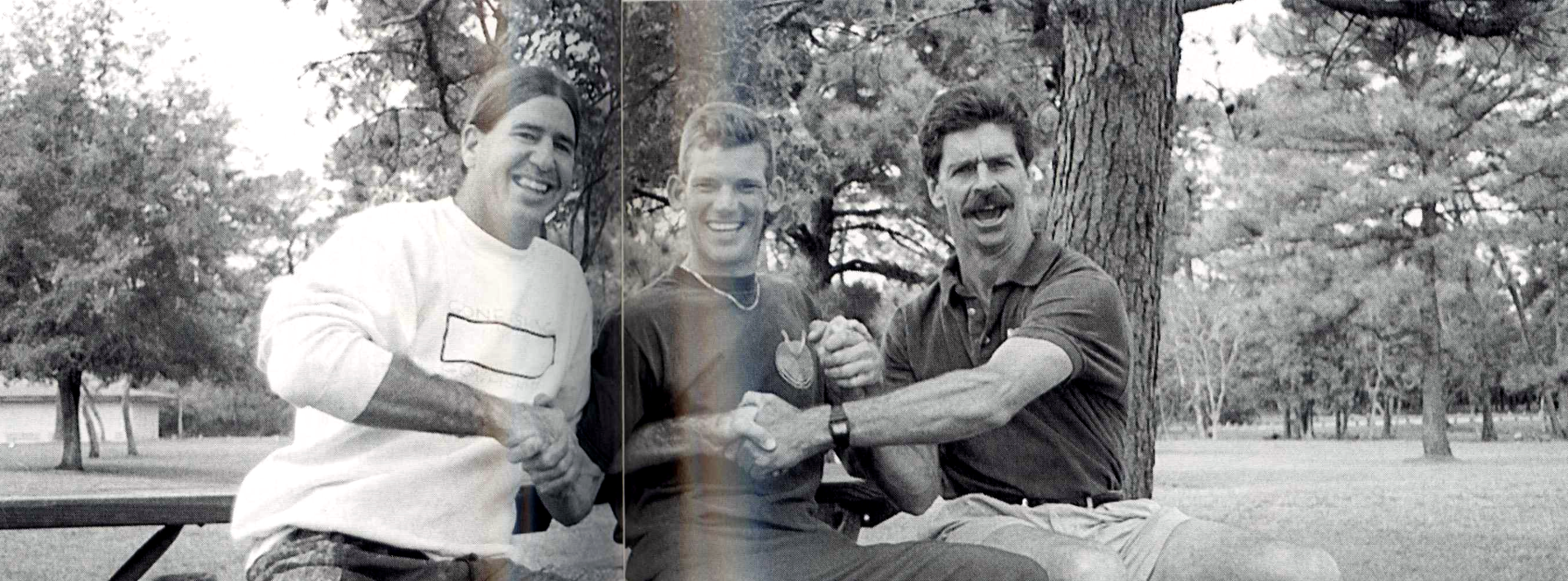
Meeting Jeff “Jaws” Watson and Mark Watson brought Hosfeld into Sarasota Ultimate, where he played in 1977–1978. After moving to Orlando in 1979, he continued playing intermittently with Ultimate Frisbee Orlando. Ultimate remained a thread of team play and friendship alongside the Disc Golf, freestyle, performance and Builder work for which he became best known.
The early record shows an athlete developing several skills at once. Hosfeld and Scott Keating finished third in Open Pairs Freestyle at the 1980 FPA West Palm Beach tournament. His Florida induction history credits the partnership with state freestyle championships in 1981 and 1982, and credits Hosfeld with Florida Golf and overall titles in 1982. These were overlapping pursuits, rather than successive careers.
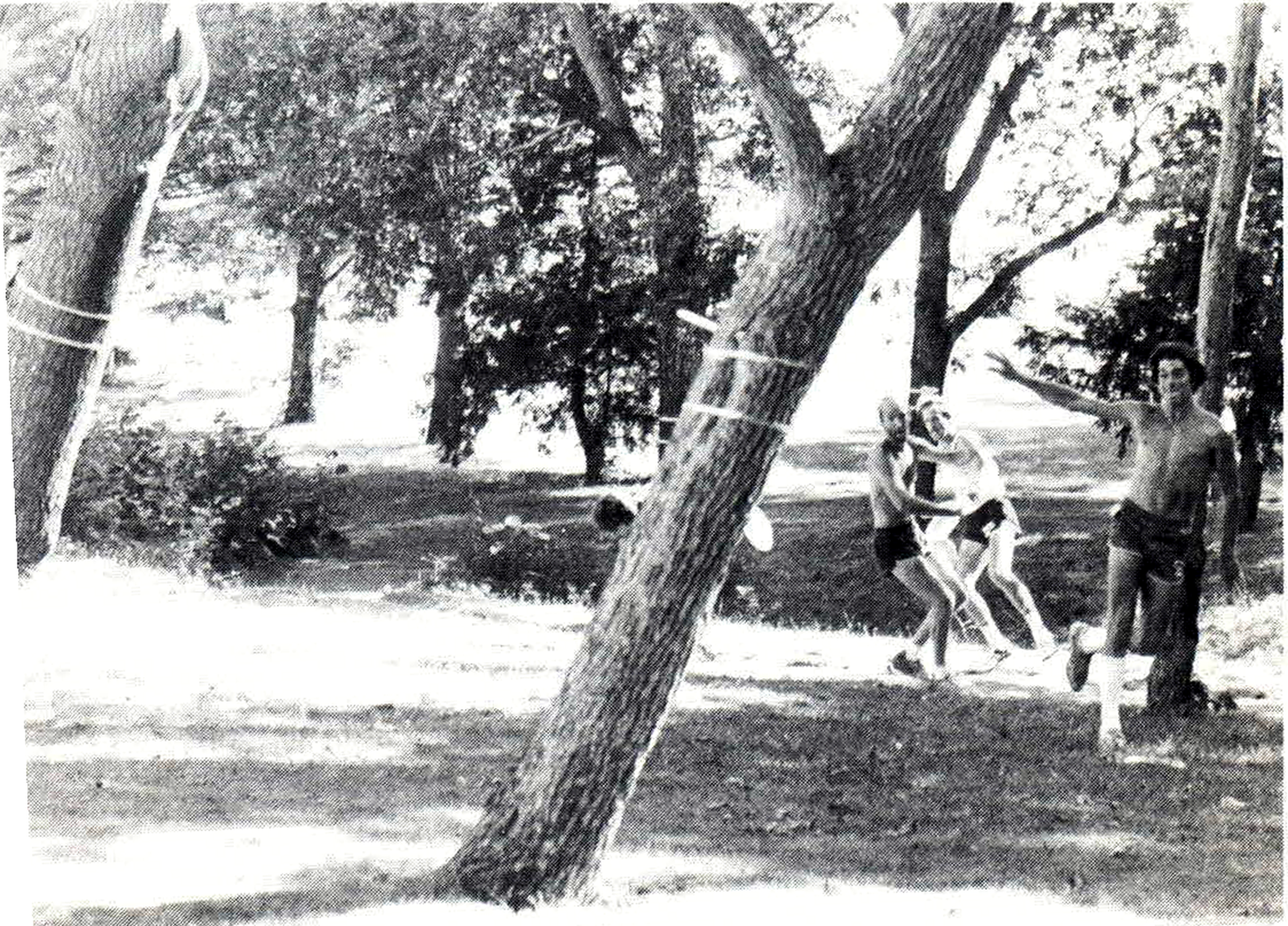
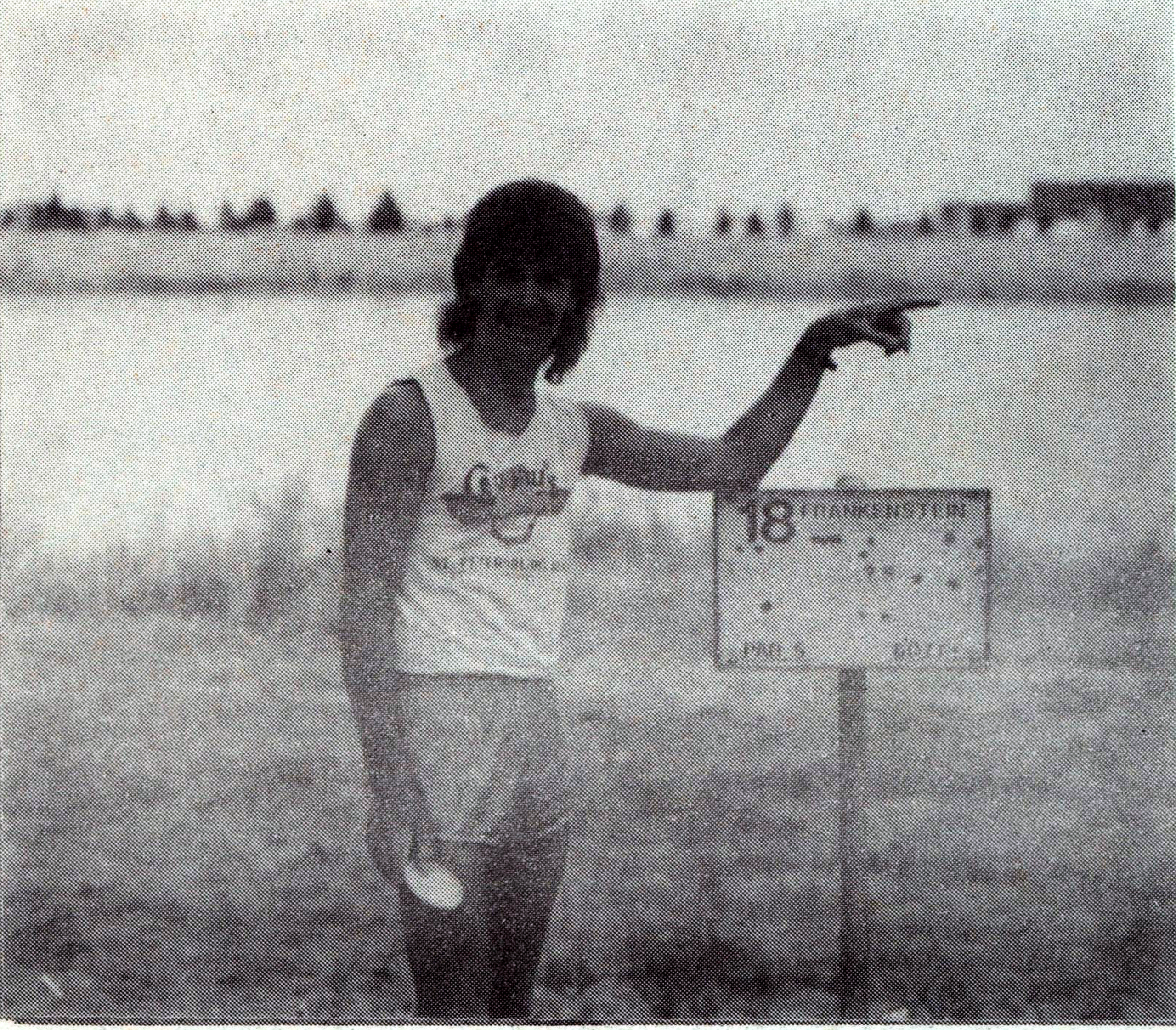
In May 1982 he won men’s Golf at the Eastern National Frisbee Disc Championships. During World Frisbee Championships week that July, he won both mini Disc Golf and mini Discathon; contemporary coverage recorded a winning mini Discathon time of 1:28. A photograph from the same World Championships shows him competing in full-size Discathon with Dennis Loftus, Alan Beaver and Eric Wootten.
His competitive record extends across Disc Golf, freestyle, overall, accuracy, Double Disc Court and mini-disc events, while his Sarasota recollections also describe playing Ultimate. The variety matters: precision, endurance, improvisation and teamwork all informed his approach to flying discs. The mini disc, in particular, became both a serious competitive implement and a vehicle for his humor.
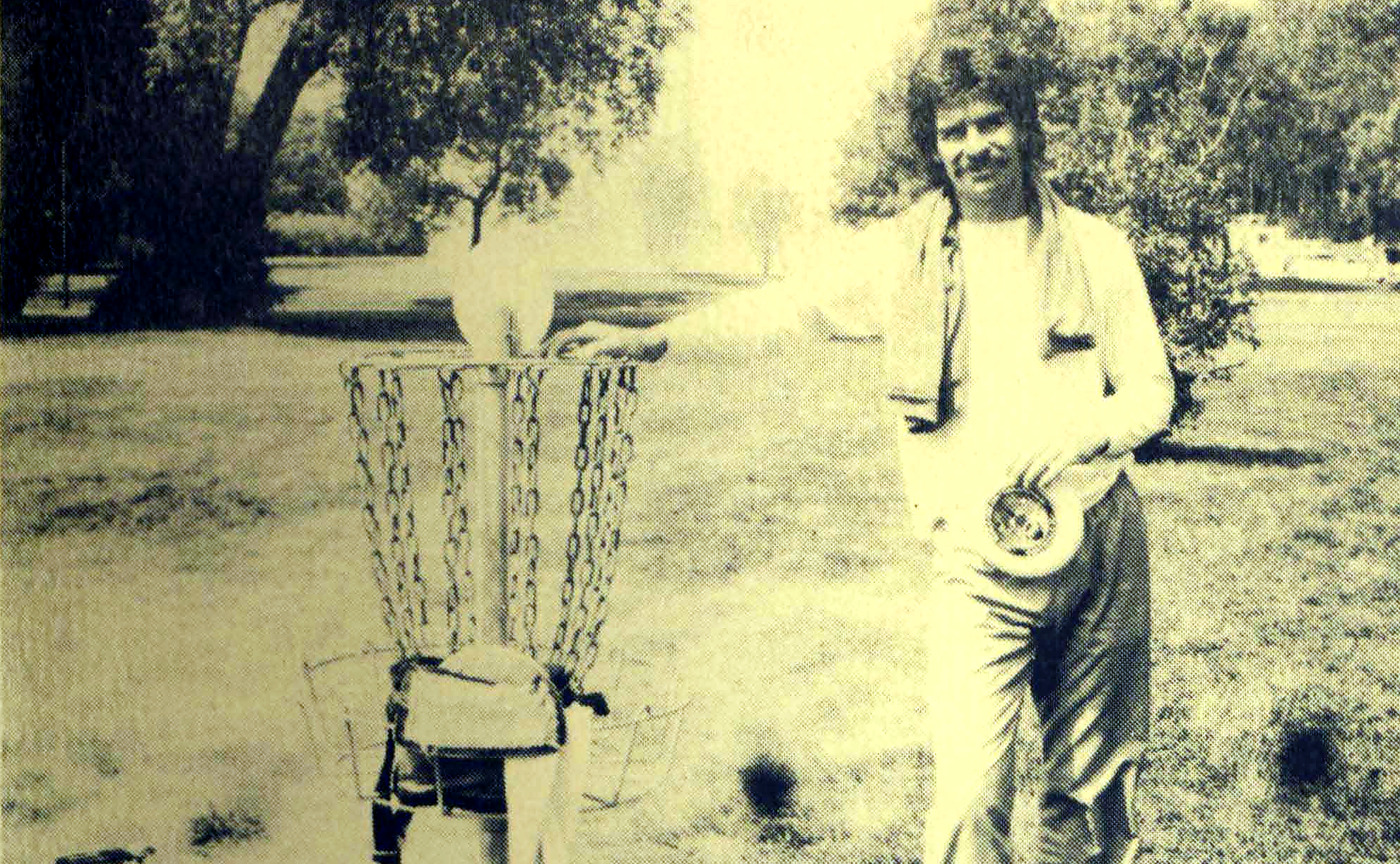
Hosfeld’s defining Open Disc Golf victory came at the 1987 PDGA World Championships in Toronto. He and Michael Sullivan finished regulation tied, and Hosfeld won the playoff. The surviving competition film preserves the pressure of that conclusion; the trophy photographs capture its aftermath. His achievement belonged to a growing Florida championship tradition that included his Sarasota mentor Jeff Watson and, later, Ken Climo.
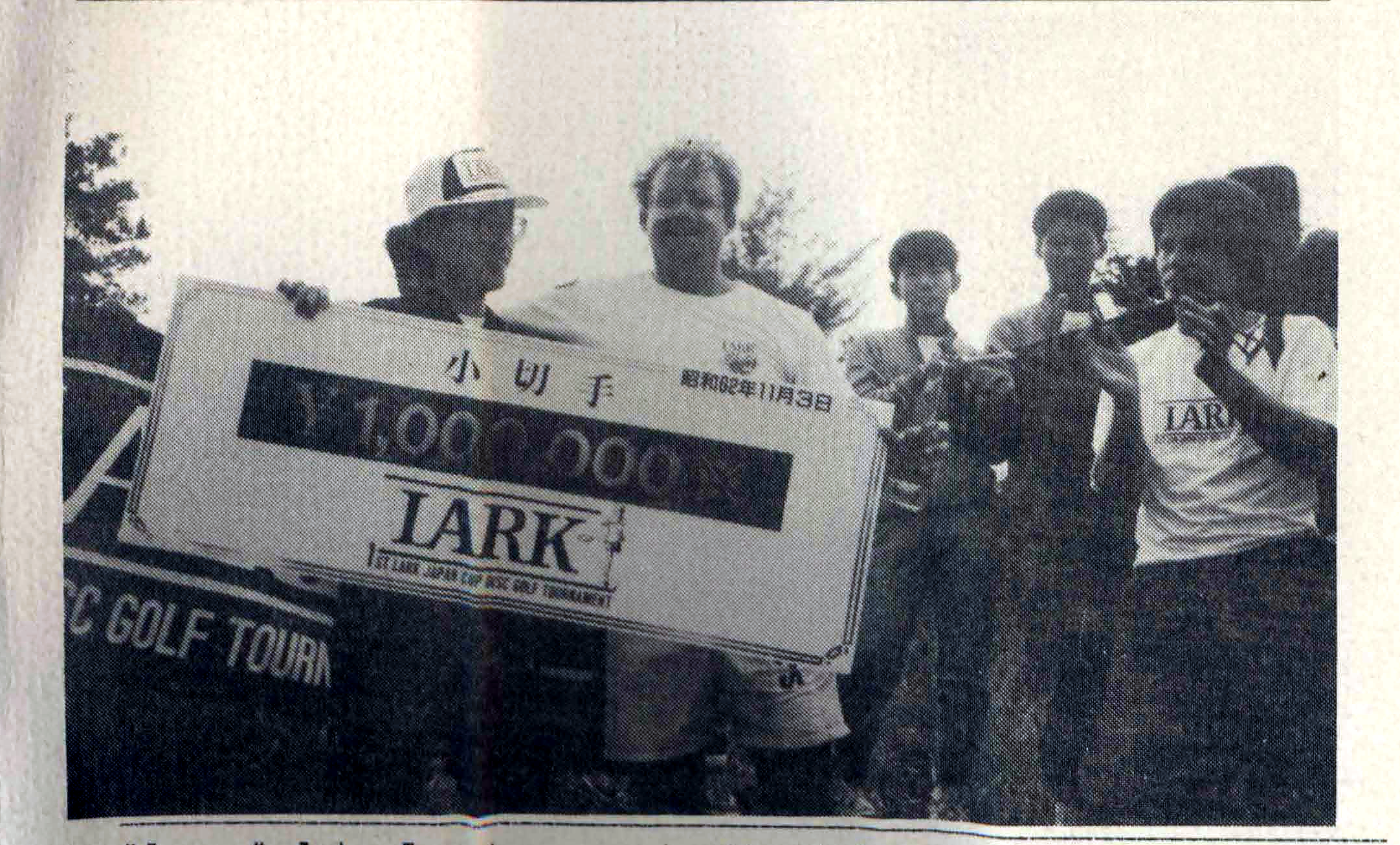
The same Worlds brought a second-place Open Doubles finish with Sam Ferrans. Later that year Hosfeld traveled to Japan, where a Japan Cup photograph places him alongside David Greenwell and John Brooks. The world-title season made him a prominent face in disc publications, including the covers and awards photographs gathered in this profile’s gallery.
His competitive life continued beyond the championship moment. He won the 1988 Brandsmart United States Open Folf Tournament, remained a touring presence, and reached the Masters final at the 1994 PDGA Worlds. The 1995 World 150 Class Championship added a Masters title in a distinct equipment category. In 2001, he and Stan McDaniel won Masters Doubles at the PDGA Professional World Championships.
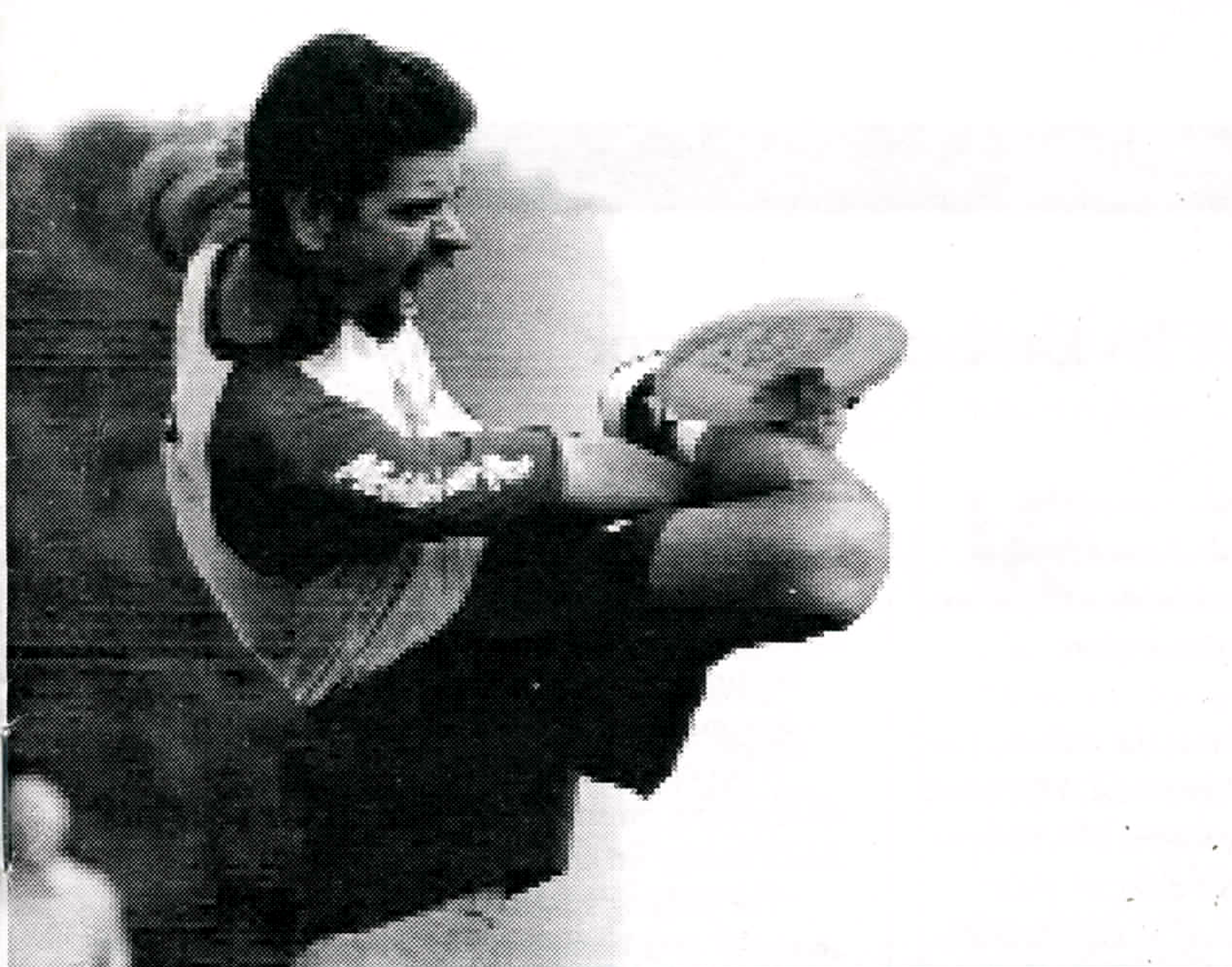
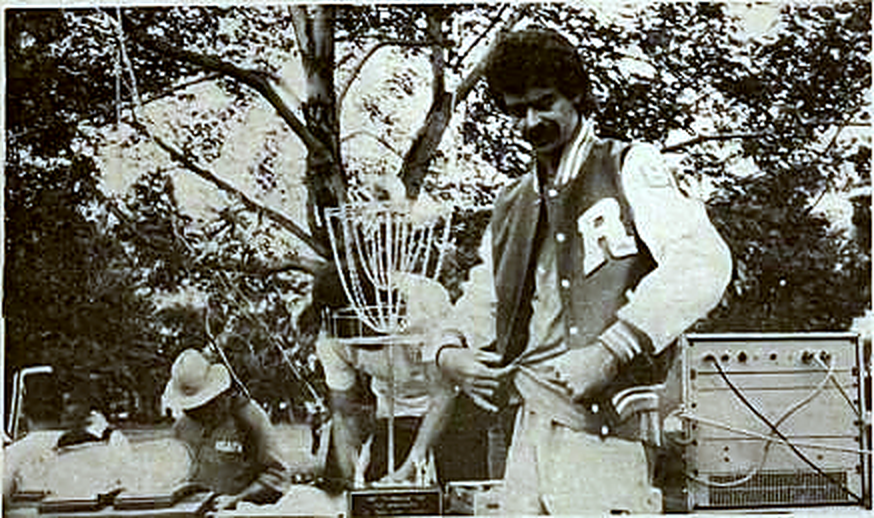
Freestyle was never merely a warm-up for Hosfeld’s Golf career. The balance, spinning control and acrobatic catches visible in his performances were the product of sustained competitive practice. Historical film shows him with Willi Williams in the 1985 Alabama State finals and with Billy Emerson in the winning 1996 Southeastern routine.
Published results document freestyle victories at the 1990 Alabama State and Florida Flying Disc championships. At the 1996 Southeastern Regional Championships he won both freestyle, with Emerson, and the overall title. He finished second in freestyle at the 1998 U.S. Open with John Houck and Paul Kenny, and won the 2000 Cypress Gardens Flying Disc Challenge freestyle event with Kenny.
International freestyle footage adds another dimension: the 2003 FPA Worlds semifinal routine with Gary Auerbach on the beach at Rimini, Italy. Together, these images and films show the timing and partnership behind the results. They also explain why a freestyle photograph is an appropriate portrait of a man often introduced simply as a Disc Golf world champion.
Hosfeld turned sporting skill into a performing life. His Florida induction biography describes work with National School Assemblies, the Air Aces and the Spinning Bees, as well as Hero Disc in Japan. Schools, comedy clubs, cruise ships and theme parks brought him audiences who might never have attended a tournament. Juggling, balance, unusual catches and comic invention made disc skills accessible to spectators. His juggling earned recognition in its own right: the Atlanta Jugglers Association records Hosfeld as the “Most Stupendous” award recipient at its 1990 Groundhog Festival.
One of his most memorable television appearances was on David Letterman’s Stupid Human Tricks. The short clip in the Video Gallery shows his mini-disc breath-control trick. Contemporary coverage of his 1987 championship referred back to the appearance the previous fall; the historical WFDF record list credits him with an 8.70-second mini blow-tips mark in New York on November 25, 1986. This is a duration record for supporting the disc with breath, rather than a count of consecutive tips.
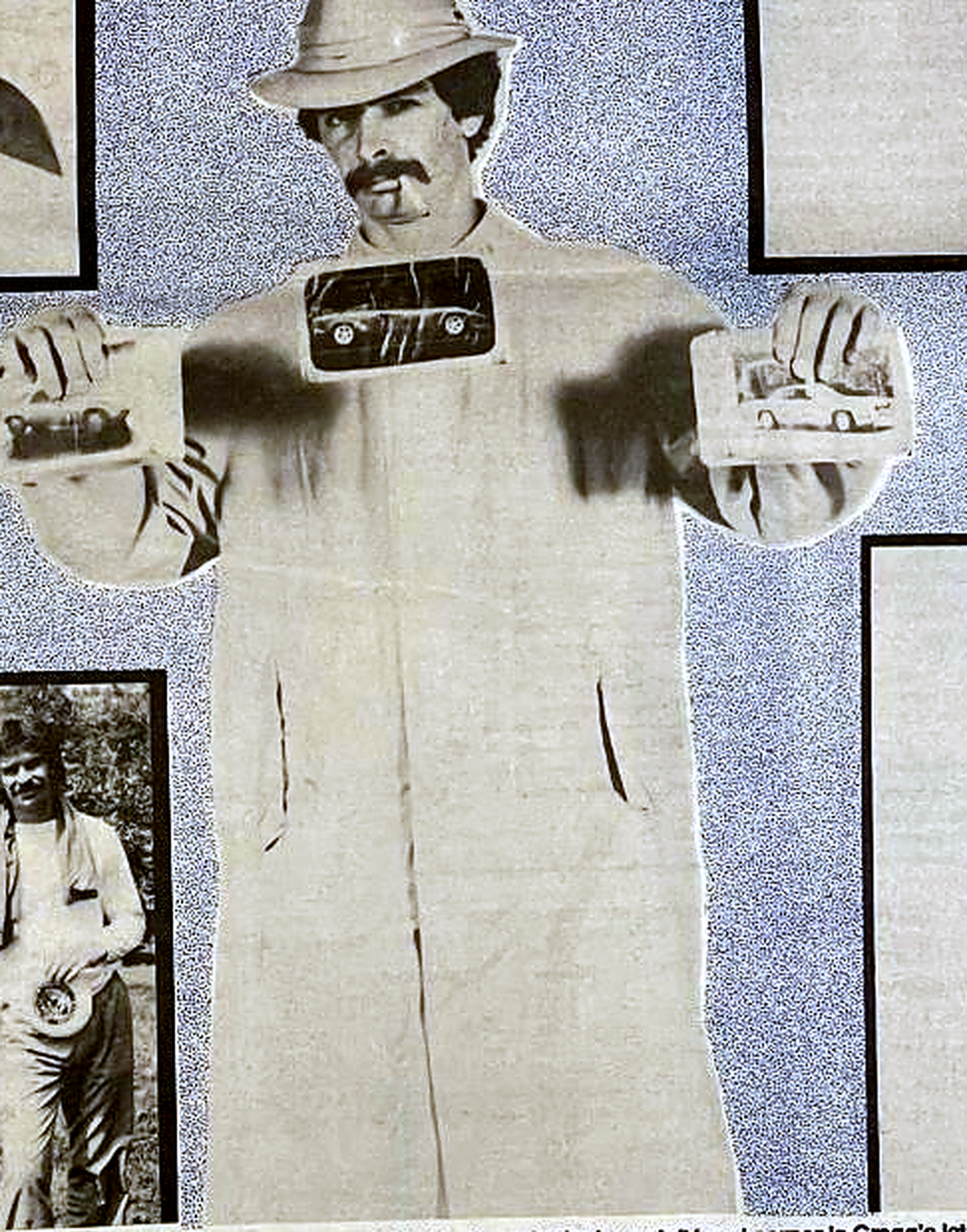
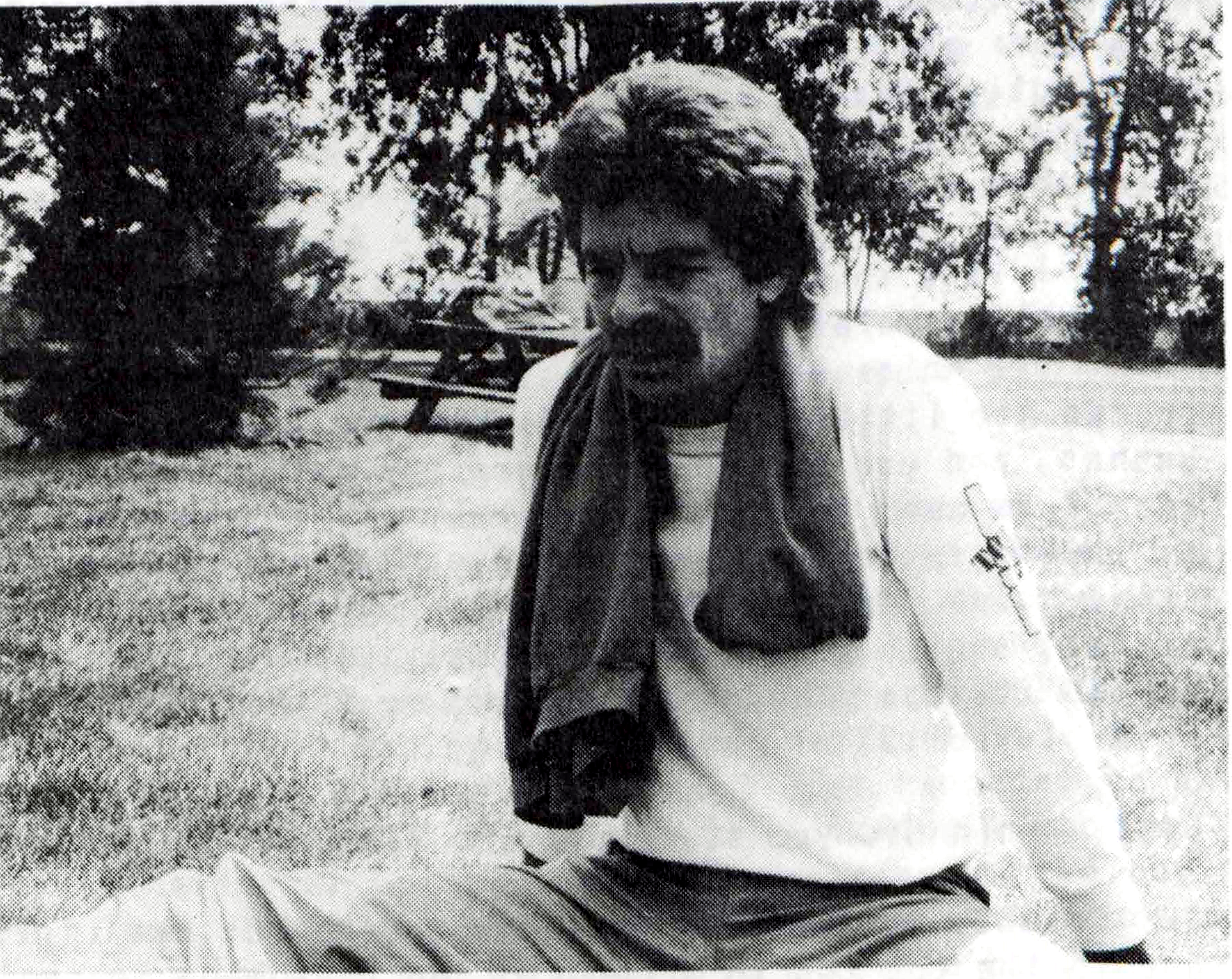
The touring photographs tell a broader story than a celebrity list. A demonstration with Jack Hanna at the Columbus Zoo, a SeaWorld photograph with the Smothers Brothers, and images with Howie Mandel and Ali Landry document the settings and people encountered during his performing years. A 2001 Spinning Bees photograph and Hosfeld’s accompanying travel writing connect the stage work to the daily life of a traveling disc professional.
Hosfeld also became one of the people who explained the sport to its own community. His Hall biography credits two decades as a senior correspondent for Disc Golf World News. The surviving bylines include instruction, travel, player profiles, humor and practical discussion of how a young sport could serve its players better.
Having Fun, Scoring Better, published in Spring 1989, connected enjoyment with competitive improvement. His Winter 1994 discussion of the course directory addressed a touring player’s practical problem: finding more time to play and spending less time searching for courses. A Winter 2000 article followed Juliana Korver, while the Winter 2001 On the Road Again account described Spinning Bees travel.
Those articles give the biography a first-person thread. Hosfeld was not only collecting tournament finishes; he was observing how players traveled, how courses functioned and how the sport reached new audiences. His published photographs and road stories are part of the historical record through which later generations can understand that era.
Media and journalism belong at the center of Hosfeld’s Builder story. His contribution was sustained authorship, photography, correspondence and interviewing: work that helped a dispersed sporting community learn about its players, competitions and courses. He participated in the events and relationships he described, bringing a traveling professional’s experience to the printed page.
His range extended from teaching to advocacy. The course-directory article connected travel writing to the practical task of making courses easier to find. A letter published in Disc Golf Journal in January–February 1998 returned to teaching and the importance of continuing to learn. The Korver profile directed attention toward another champion, while his touring accounts recorded the working culture surrounding the sport. These different forms of journalism helped readers understand both how to play and how the community was growing.
The articles and credited photographs now serve a further purpose: they preserve the people, places and everyday experience of an era before today’s continuous online coverage. Hosfeld’s media work is therefore part of the sport’s development and part of its surviving historical record. His career as a chronicler deserves to be read alongside his championship record, rather than as a footnote to it.
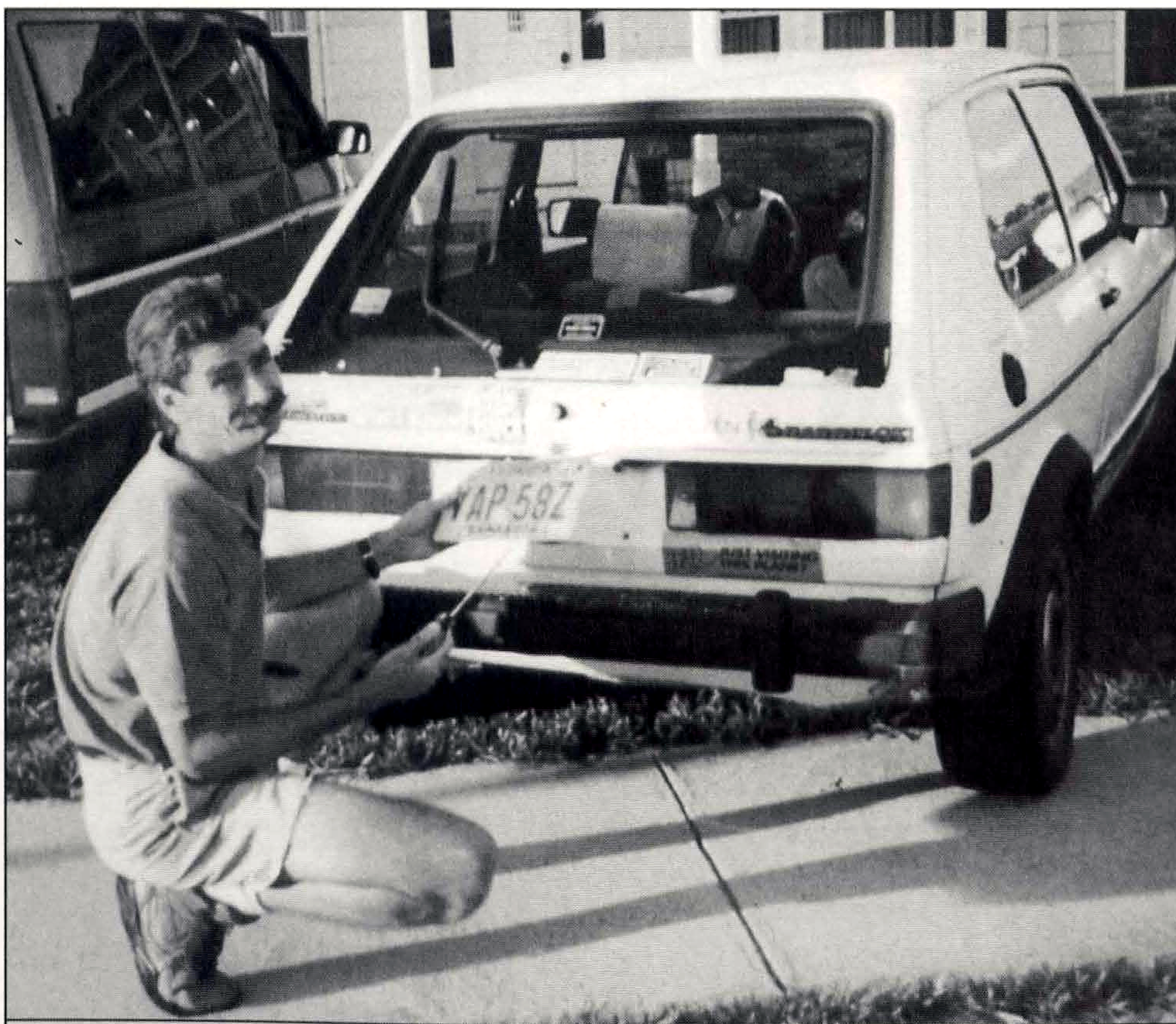
A lifetime of playing different landscapes gave Hosfeld an unusually broad course vocabulary. On November 18, 2008, he and Ben Calhoun deliberately completed their 1,000th courses together at the Jim Warner Memorial Course at the International Disc Golf Center. The contemporary PDGA account describes a shared milestone, a fitting culmination of years spent seeking out places to play.
In Florida, his work went beyond visiting. Contemporary accounts document involvement with Sarasota’s North Water Tower Park, finding and installing a course at the Quarry, and the original Gran Canyon project in Brooksville. His own Spring 1996 column also described consulting on an experimental course at Coleman Medium Security. These were different forms of contribution—advocacy, site work, consultation and design—and each helped extend the sport’s reach.
Gran Canyon became a particularly important part of the story. The 2006 competition footage preserves play on the original course. In a 2007 interview at Indian Hammocks Open in Miami, Hosfeld discussed its removal, the stored baskets and the search for another site. Years later, the Brooksville property became home to Olympus. UDisc credits Hosfeld with the original course design, Mike Barnett with significant redesigns from 2013 to early 2023, and Paul McBeth with major alterations from early 2023 onward. The two courses share a landscape and part of their design history, but should not be treated as the same layout.
Hosfeld cofounded World Champion Disc Golf Design in 2010. His Florida portfolio includes Picnic Island, Turkey Lake’s T2 Turkeynator, Champions Pointe at Lake Hiawatha Preserve, Green Gauntlet at Palmetto Point, and the Alpha course at River City Nature Park. Course design made his experience available to people who would never meet him: every round could introduce another player to the possibilities of the sport.
This is a Builder contribution with several distinct stages. Finding suitable land and advocating for access come before a fairway is played; design, installation and continuing stewardship turn that opportunity into a usable course. Hosfeld’s Florida record includes several of those roles. The Quarry and Gran Canyon accounts document site development, North Water Tower Park documents advocacy, and the Coleman account describes consultation. The differences are essential to understanding what he actually contributed.
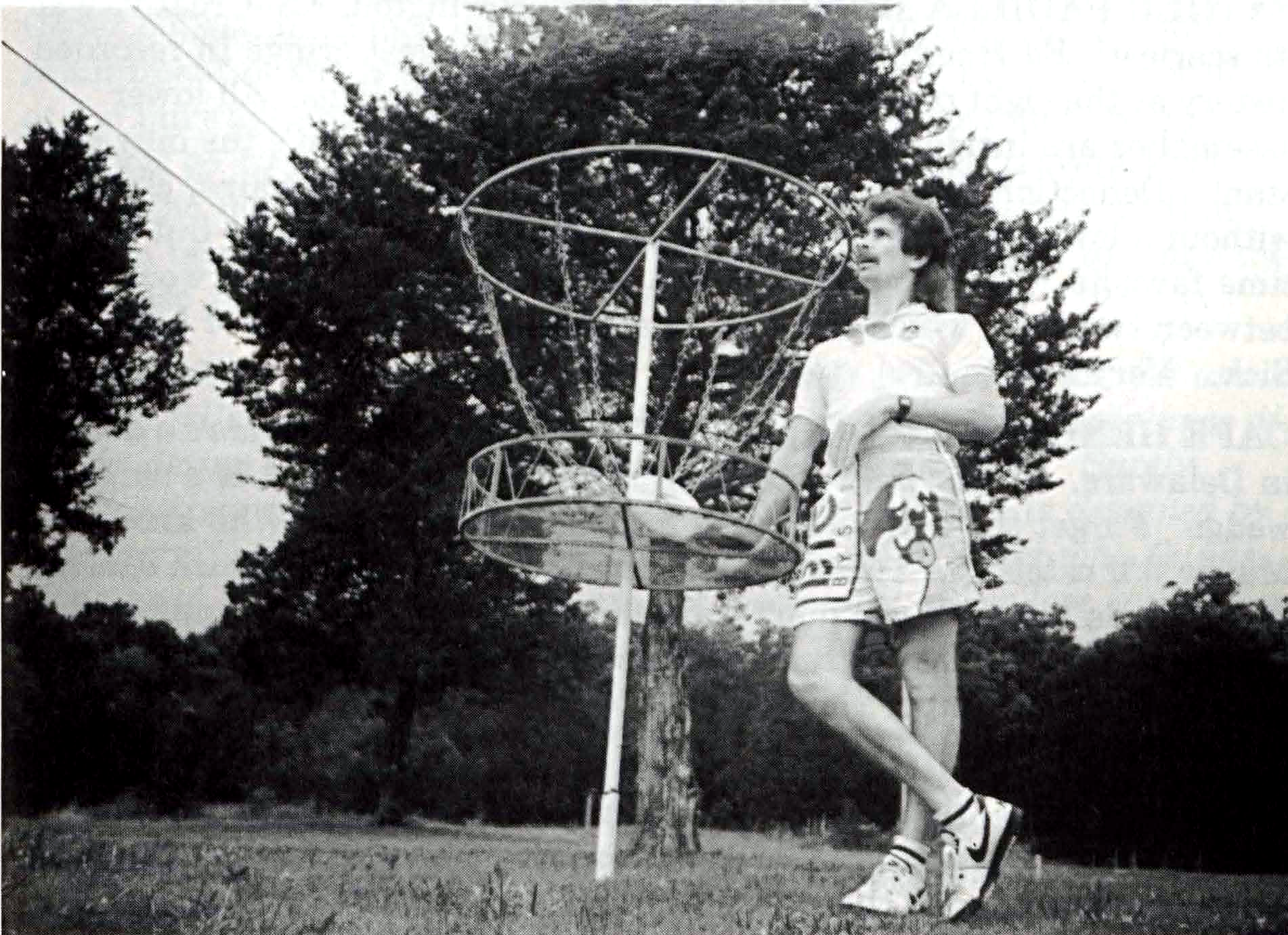
Four of Florida’s top ten. Hosfeld’s design legacy is represented at four courses in UDisc’s 2026 Florida top ten: Olympus in Brooksville (No. 1), Champions Pointe in Groveland (No. 3), Green Gauntlet in Eustis (No. 5), and T2 at Bill Frederick Park in Orlando (No. 8). He designed the original Gran Canyon course on the Olympus property; Mike Barnett and Paul McBeth shaped later layouts. Alongside his other Florida projects, this recognition underscores his standing as a leading course designer and builder in the state.
The reach of Hosfeld’s course work is visible across Florida. His established portfolio connects Tampa’s Picnic Island, Orlando’s T2 Turkeynator, Champions Pointe at Lake Hiawatha Preserve, Green Gauntlet at Palmetto Point and Alpha at River City Nature Park. These places give his Builder legacy a continuing public life: players encounter his work every time they step onto the course.
World Champion Disc Golf Design also credits Nature Park in Mount Dora, Alligator Lake in Lake City and Heritage Park Gardens in Live Oak among his designs. It describes his Magnolia role in Live Oak specifically as consultation and co-building. That distinction preserves the collaborative character of course development rather than assigning every project the same sole-designer credit.
The Disc Golf Course Designers group lists Hosfeld as a Master Designer. His firm’s account emphasizes designing for different abilities, reading the natural landscape, and using multiple tees and basket positions to create varied play. That approach connects the champion’s technical experience with a community builder’s responsibility to welcome players whose skills and needs differ from his own.
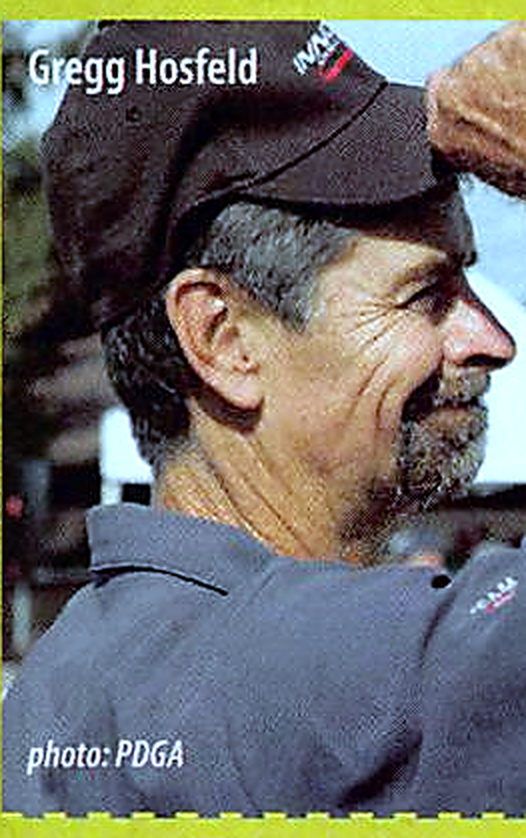
Hosfeld’s competitive longevity produced another major chapter. In 2008 he won the PDGA Grandmasters world championship in Michigan by four strokes over David Greenwell. In 2010 he won that division again in Indiana, finishing three strokes ahead of Tim Keith. Together with the 1987 Open championship, these are his three PDGA Professional Worlds singles titles.
Between them came a different international honor: gold in Open Disc Golf at the 2009 WFDF World Overall Championships in Jacksonville. It was a world-stage achievement on Florida soil, and a reminder of his roots in the broader flying-disc community. The WFDF title, PDGA titles, doubles championship and mini-disc victories belong to distinct competitions; their variety is part of the achievement.
He also won four consecutive Tim Selinske U.S. Masters Grandmasters titles from 2009 through 2012. The 2010 victory came by five strokes over Tim Keith; in 2011 he finished twelve strokes ahead of David Greenwell. The sequence demonstrates that his later world championships were supported by sustained national success, rather than isolated returns to form.
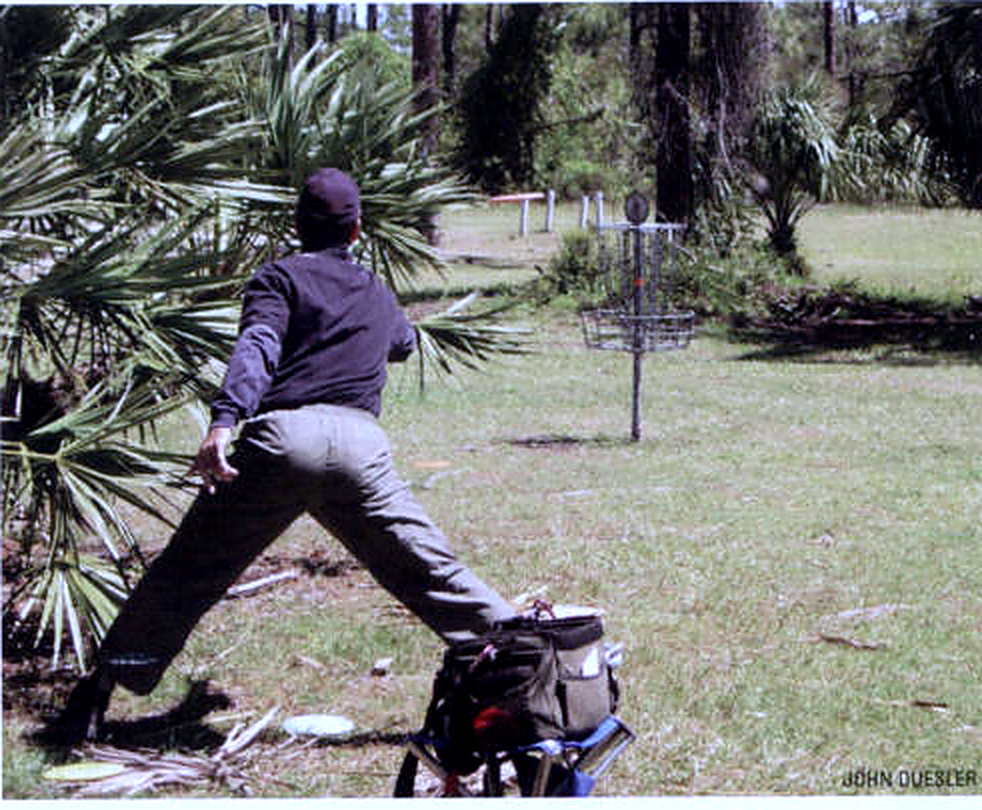
Playing, teaching and building were accompanied by organizational work. A 2022 professional biography records his service as PDGA communications director in 1999–2000, matching-baskets coordinator in 2001–2002, and a Disc Golf Foundation board member beginning in 2020. Earlier recognition included a 1994 PDGA Touring Pro Award and a 2002 Touring Player Pin. His induction into the World Disc Golf Hall of Fame in 1998 recognized a career that was already much larger than one championship. In 2025, the PDGA presented him with a special award recognizing his service as a member of its 2000 Board of Directors.
The Florida Hall induction in 2022 returned the story to Sarasota. Alongside Jeff Watson and Tim Willis, Hosfeld represented a community in which friends learned together and then carried those skills into different forms of service. His contribution spans the tournament field, the performance stage, the printed page and the public park.
That range is his distinctive place in Florida history. Few athletes combine world-class competition in one discipline with such sustained accomplishment across other disc events, professional entertainment, historical writing, course design and organizational service. Hosfeld’s life in flying discs is the story of both mastering a sport and making more room for other people to discover it.
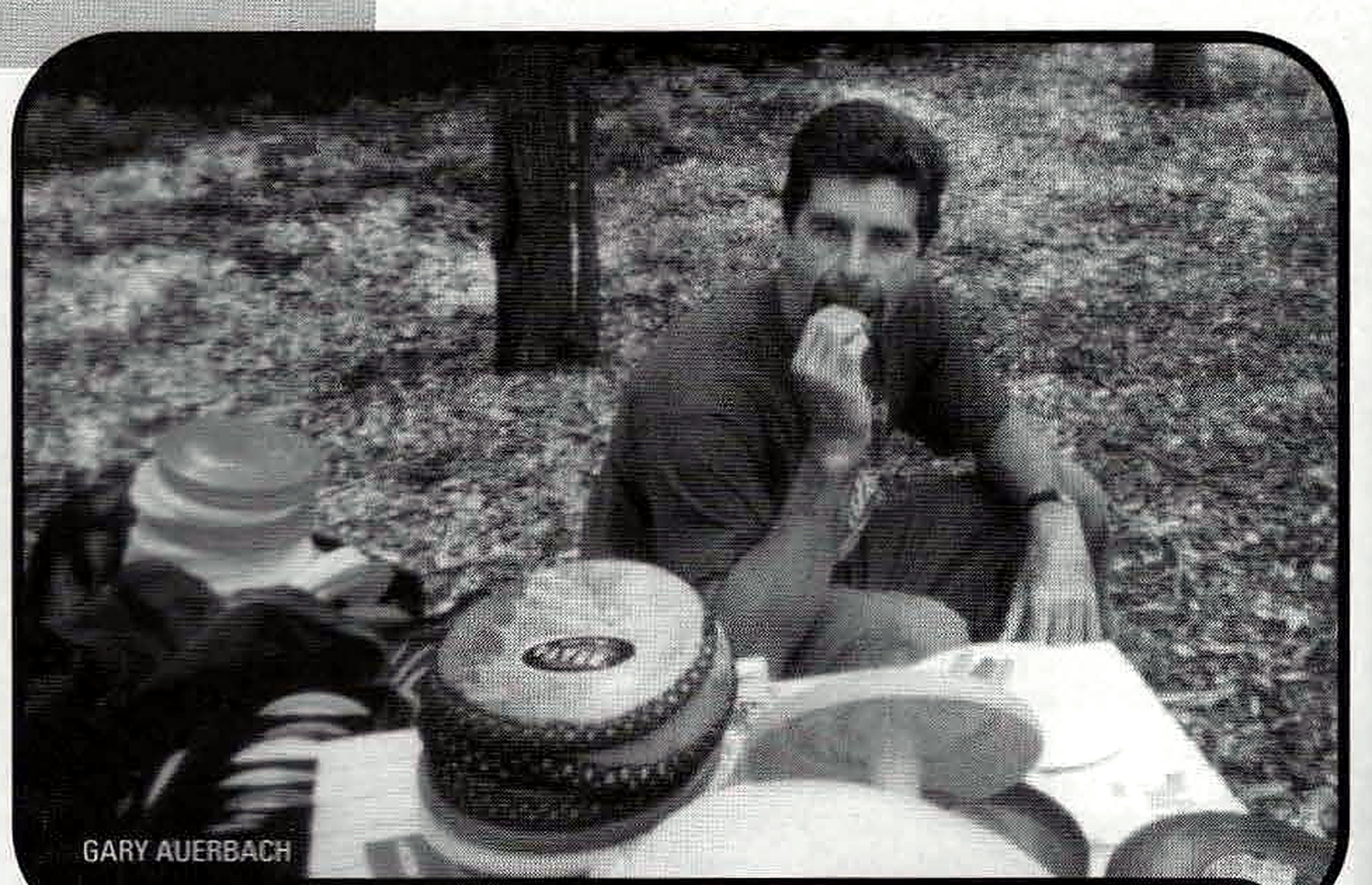
1987
PDGA Professional Worlds
Champion
Playoff victory over Michael Sullivan in Toronto.
2008
PDGA Professional Worlds
Champion
Four strokes ahead of David Greenwell.
2010
PDGA Professional Worlds
Champion
Three strokes ahead of Tim Keith.
Selected defining results across Disc Golf, freestyle, overall and mini-disc competition, followed by the work that helped build the sport.
| Year | Event | Division / discipline | Achievement |
|---|---|---|---|
| 1982 | World Mini Disc Championships | Mini Disc Golf | Champion |
| 1982 | World Mini Disc Championships | Mini Discathon | Champion; 1:28 |
| 1987 | PDGA World Championships, Toronto | Open Disc Golf | Champion; playoff victory over Michael Sullivan |
| 1987 | PDGA World Championships | Open Doubles | Runner-up with Sam Ferrans |
| 1995 | World 150 Class Championship | Masters Disc Golf | Champion |
| 2001 | PDGA Professional Worlds Divisional Doubles | Masters Doubles | Champion with Stan McDaniel |
| 2008 | PDGA Professional World Championships, Michigan | Grandmasters | Champion; 4 strokes over David Greenwell |
| 2009 | WFDF World Overall Championships, Jacksonville | Open Disc Golf | Gold medal |
| 2010 | PDGA Professional World Championships, Indiana | Grandmasters | Champion; 3 strokes over Tim Keith |
| Year | Event | Division | Achievement |
|---|---|---|---|
| 1982 | Eastern National Frisbee Disc Championships | Men’s Golf | Champion |
| 1988 | Brandsmart United States Open Folf Tournament | Disc Golf | Champion |
| 2009 | Tim Selinske U.S. Masters | Pro Grandmasters | Champion |
| 2010 | Tim Selinske U.S. Masters | Pro Grandmasters | Champion; 5 strokes over Tim Keith |
| 2011 | Tim Selinske U.S. Masters | Pro Grandmasters | Champion; 12 strokes over David Greenwell |
| 2012 | Tim Selinske U.S. Masters | Pro Grandmasters | Champion; Johnny Sias runner-up |
| Year | Event | Discipline | Result / partners |
|---|---|---|---|
| 1980 | FPA West Palm Beach | Open Pairs Freestyle | 3rd with Scott Keating |
| 1981 | Florida State Championships | Freestyle | Champion with Scott Keating¹ |
| 1982 | Florida State Championships | Freestyle | Champion with Scott Keating¹ |
| 1982 | Florida State Championships | Overall | Champion¹ |
| 1985 | Alabama State Championships | Freestyle | Finals routine with Willi Williams; 2nd per the recording’s description |
| 1990 | Alabama State Championships | Open Freestyle | Champion |
| 1990 | Florida Flying Disc Championships | Open Freestyle | Champion |
| 1996 | Southeastern Regional Championships | Open Freestyle | Champion with Billy Emerson |
| 1996 | Southeastern Regional Championships | Open Overall | Champion |
| 1998 | U.S. Open Flying Disc Championships | Open Freestyle | Runner-up with John Houck and Paul Kenny |
| 2000 | Cypress Gardens Flying Disc Challenge | Open Freestyle | Champion with Paul Kenny |
| 2003 | FPA World Championships, Rimini | Freestyle | Semifinal routine with Gary Auerbach |
The Hall’s 2022 induction biography credits these Florida Open Golf titles, including two championships in 1984.
| Year | Championship | Division / result |
|---|---|---|
| 1982 | Florida championships | Open Golf champion |
| 1984 | Florida championships | Two Open Golf titles |
| 1997 | Florida championships | Open Golf champion |
| 1998 | Florida championships | Open Golf champion |
| 2011 | Florida championships | Open Golf champion |
These age-division titles are credited in the Hall’s 2022 induction biography and are separate from PDGA Professional Worlds singles.
| Year | Competition | Division / achievement |
|---|---|---|
| 1994 | Mini Disc Golf Worlds | Masters 40 champion |
| 1997 | Mini Disc Golf Worlds | Masters 40 champion |
| 2008 | Skillshot Masters Worlds | Champion |
| 2011 | Skillshot Masters Worlds | Champion |
| 2012 | Mini Disc Golf Worlds | Masters 50 champion |
| 2022 | Mini Disc Golf Worlds | Masters 60 champion |
| 2022 | Skillshot Masters Worlds | Masters 60 champion |
| Year / period | Distinction or role | Historical significance |
|---|---|---|
| 1986 | Mini blow-tips world record | 8.70 seconds supporting a mini disc with breath; New York, November 25 |
| 1994 | PDGA Touring Pro Award | Recognition in the contemporary honoree list |
| 1990 | Atlanta Jugglers Association Groundhog Festival | “Most Stupendous” award |
| 1998 | World Disc Golf Hall of Fame | Inducted |
| 2025 | PDGA special award | Recognition for service on the 2000 Board of Directors |
| 1999–2000 | PDGA communications director | Organizational service recorded in his 2022 professional biography |
| 2001–2002 | PDGA matching-baskets coordinator | Support for course development |
| 2002 | PDGA Touring Player Pin | Touring-player recognition |
| 2008 | 1,000 courses played | Reached jointly with Ben Calhoun at the Jim Warner Memorial Course, November 18 |
| 2010 | World Champion Disc Golf Design | Cofounder |
| From 2020, documented in 2022 | Disc Golf Foundation board | Service recorded in his 2022 professional biography |
| 2022 | Florida Flying Disc Hall of Fame | Sarasota induction class with Jeff Watson and Tim Willis |
Hosfeld helped build the sport through two enduring bodies of work: the media that connected and recorded its community, and the Florida courses where people could play. His journalism, photography, teaching, advocacy, design and installation work stand alongside his competitive achievements as distinct parts of his career.
| Work | Contribution | Connection to the sport’s development |
|---|---|---|
| Senior correspondent | Two decades with Disc Golf World News, as recorded in his Hall induction biography | Sustained reporting and a traveling player’s perspective |
| Instruction and commentary | Having Fun, Scoring Better; teaching and learning correspondence | Sharing practical knowledge with other players |
| Interviews and player profiles | A Few Days with the Champ — Juliana Korver | Recording another champion’s experience |
| Photography and correspondence | Credited publication work documented in the historical record | Preserving people, events and disc culture |
| Travel and course reporting | Course-directory commentary and Spinning Bees touring accounts | Connecting readers with places to play and the life of a touring professional |
| Organizational communication | PDGA communications director, 1999–2000 | Applying communication skills in service to the sport |
| Publication date | Publication / work | Focus |
|---|---|---|
| Spring 1989 | Disc Golf World News — Having Fun, Scoring Better | Instruction and the experience of playing |
| Winter 1994 | Disc Golf World News — Course Directory Should Allow for More Fly Time and Less Drive Time | Practical improvements for traveling players |
| Spring 1996 | Disc Golf World News — Gregg’s World | Travel, course experience and the Coleman project |
| January–February 1998 | Disc Golf Journal — authored letter on teaching and continuing to learn | Player education and exchange within the disc community |
| Winter 2000 | Disc Golf World News — A Few Days with the Champ | Juliana Korver profile |
| Winter 2001 | Disc Golf World News — On the Road Again | Life on tour with the Spinning Bees |
The works above are representative selections from a broader publication record, not a complete bibliography.
| Course / project | Contribution | Historical context |
|---|---|---|
| North Water Tower Park, Sarasota | Course advocacy | Documented in 1999 coverage of Sarasota’s Disc Golf community |
| The Quarry | Site identification and installation | Documented in Spring 1998 coverage |
| Coleman Medium Security | Course consultation | Experimental course described in Hosfeld’s Spring 1996 first-person column |
| Original Gran Canyon, Brooksville* | Design and site work | Contemporary coverage; original course preserved in 2006 competition footage |
| Picnic Island, Tampa | Course design | Florida design portfolio |
| T2 Turkeynator, Turkey Lake Park | Course design | No. 8 in UDisc’s 2026 Florida ranking |
| Champions Pointe, Lake Hiawatha Preserve | Course design | No. 3 in UDisc’s 2026 Florida ranking |
| Green Gauntlet, Palmetto Point Park | Course design | No. 5 in UDisc’s 2026 Florida ranking |
| Alpha, River City Nature Park | Course design | Florida design portfolio |
| Nature Park, Mount Dora | Course design | Listed in World Champion Disc Golf Design’s portfolio |
| Alligator Lake, Lake City | Course design | Listed in World Champion Disc Golf Design’s portfolio |
| Heritage Park Gardens, Live Oak | Course design | Listed in World Champion Disc Golf Design’s portfolio |
| The Magnolia, Live Oak | Consultation and co-building | Role credited by World Champion Disc Golf Design |
* The Gran Canyon property later became home to Olympus, ranked No. 1 in UDisc’s 2026 Florida list. Mike Barnett and Paul McBeth developed later layouts.
¹ Florida freestyle and overall titles identified in the Hall’s 2022 induction biography.
Gregg Hosfeld and Willi Williams perform their finals routine. The recording’s description identifies their second-place finish.
1985 (event year) · 5:37
Historical competition footage published by gettybfree.
Hosfeld demonstrates mini-disc breath control on Stupid Human Tricks, bringing an unusual flying-disc skill to a national television audience.
November 25, 1986 (original air date) · 0:30
Late Night with David Letterman; clip published by beachjammer.
The Toronto playoff that decided the Open world championship between Gregg Hosfeld and Michael Sullivan.
August 25–30, 1987 (championship dates) · 18:06
Historical competition footage published by Gregg Hosfeld.
Hosfeld and Billy Emerson’s winning freestyle routine, illustrating the same weekend on which Hosfeld also won the overall title.
October 19–20, 1996 (event dates) · 5:48
Historical competition footage published by Gregg Hosfeld.
Gregg Hosfeld, Paul Kenny and Buddy Adams perform as the Frisbee Rebels at the TD Waterhouse Centre in Orlando. Their halftime freestyle routine illustrates Hosfeld’s demonstration-team background and his work bringing flying-disc skills to arena audiences.
March 31, 2000 (performance date) · 4:44
Historical performance footage published by Paul Kenny.
Gregg Hosfeld and Gary Auerbach in the World Championships semifinals at Rimini, Italy.
September 5–7, 2003 (championship dates) · 4:15
Competition footage published by Fabio Sanna.
Historical play at the original Gran Canyon course in Brooksville, connecting Hosfeld’s competitive career with one of his important Florida course projects.
2006 (event year) · 6:29
The Ultimate Disc Golf Show / UDGS.
At Indian Hammocks Open in Miami, Hosfeld discusses the removal of Gran Canyon, its stored baskets and the search for a replacement site.
2007 (interview year) · Excerpt 0:10–1:45
The Ultimate Disc Golf Show / UDGS interview at Indian Hammocks Open.
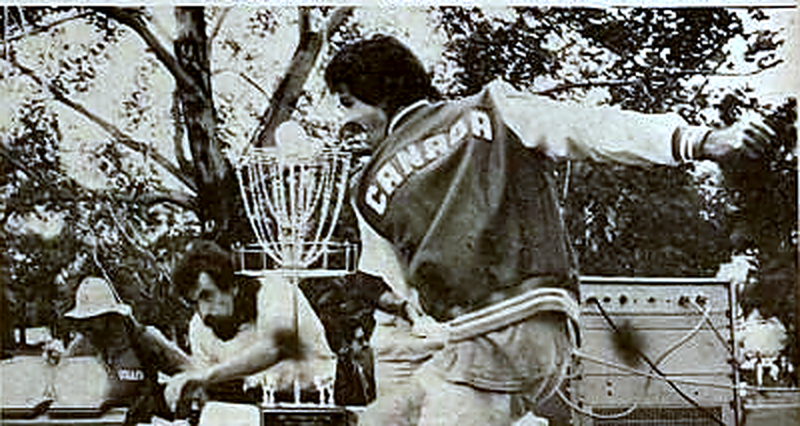
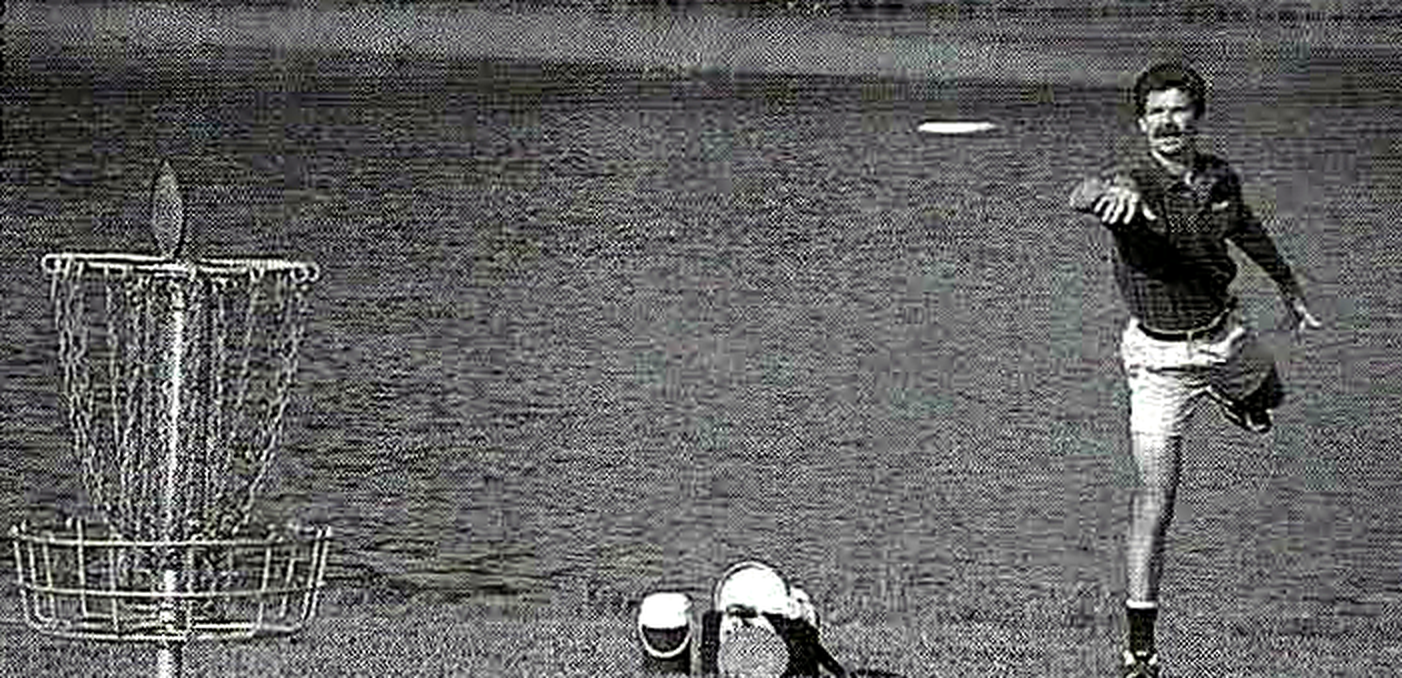
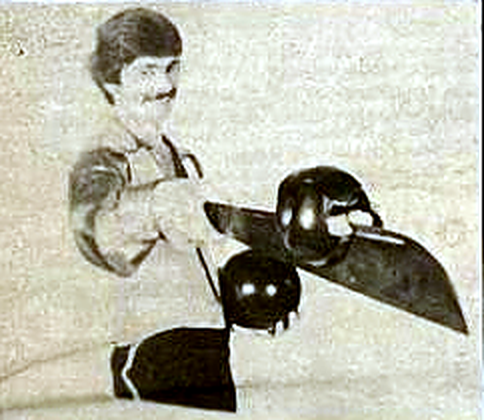
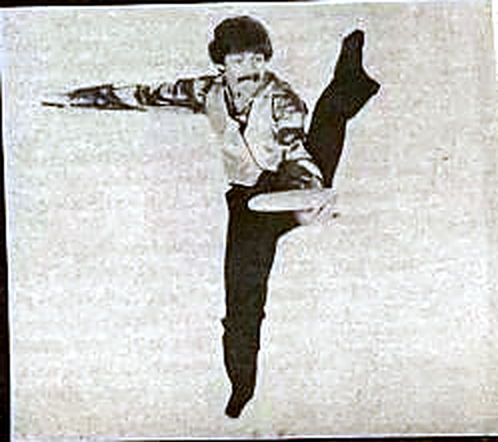
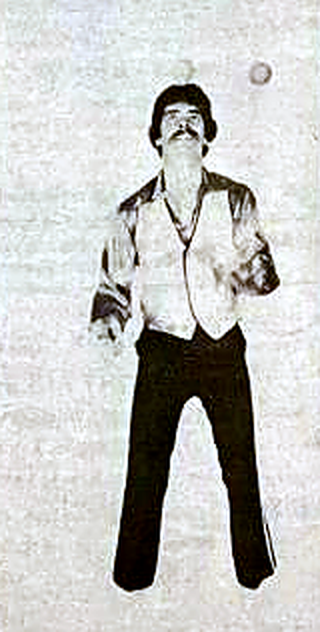
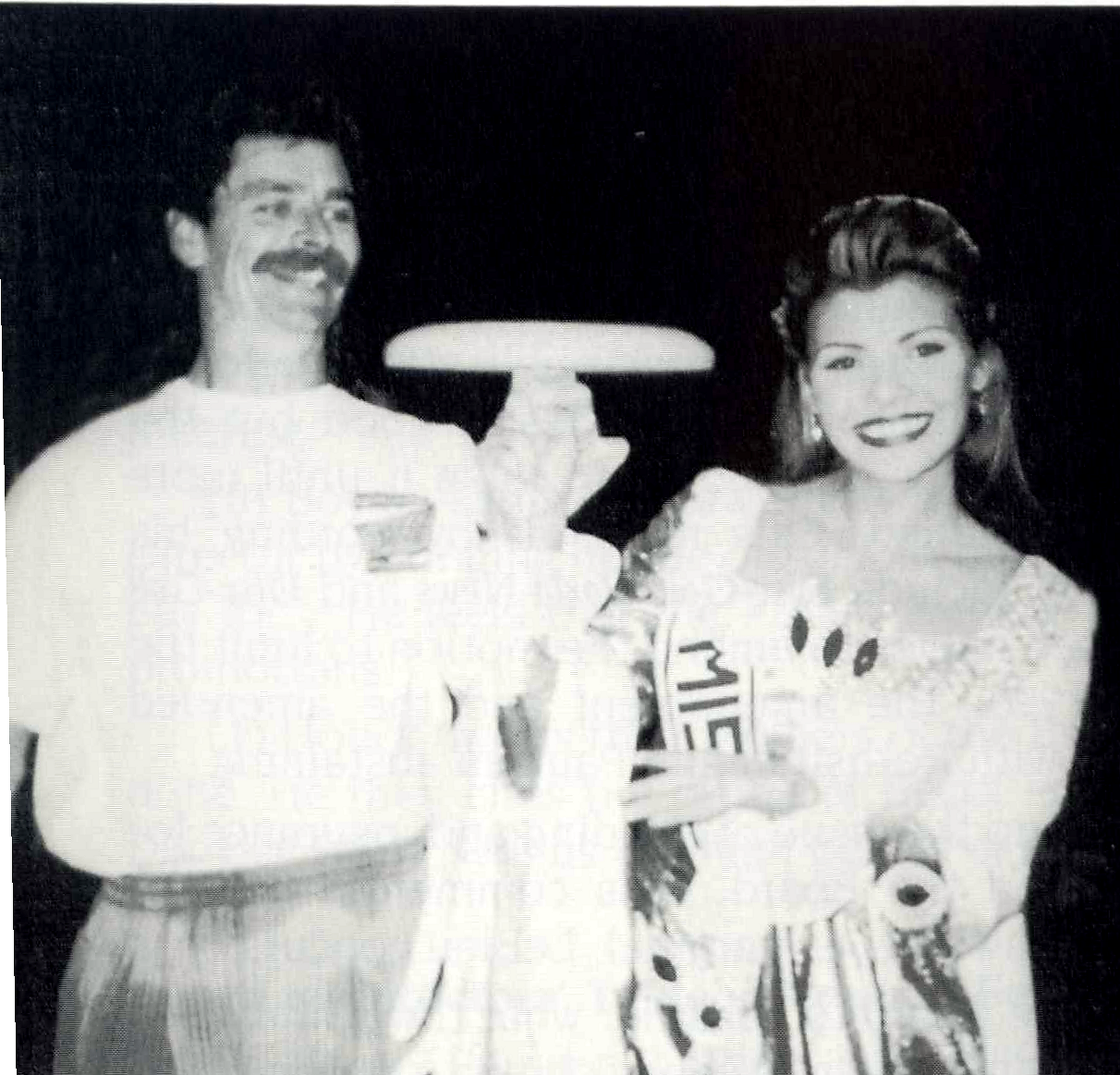
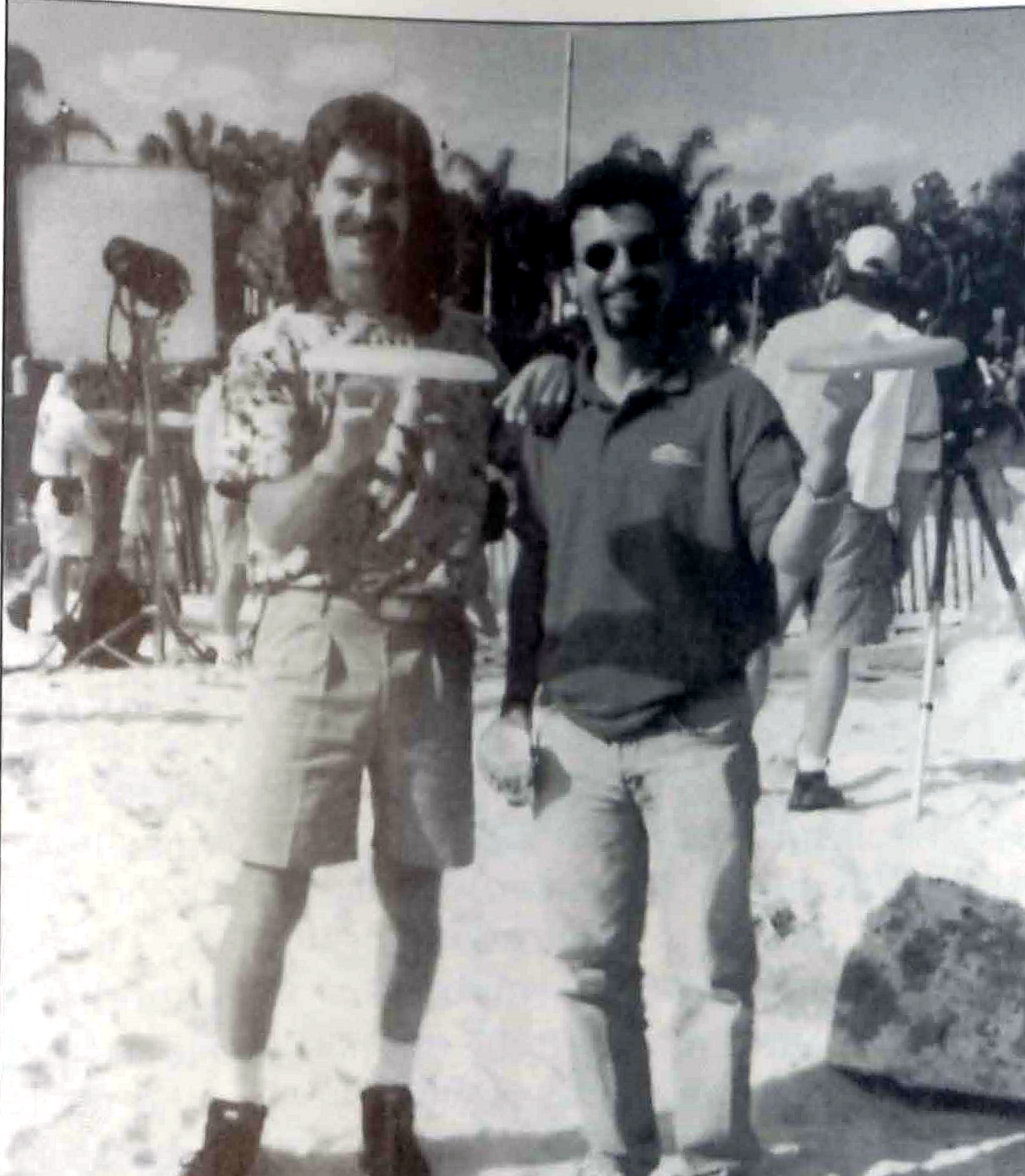
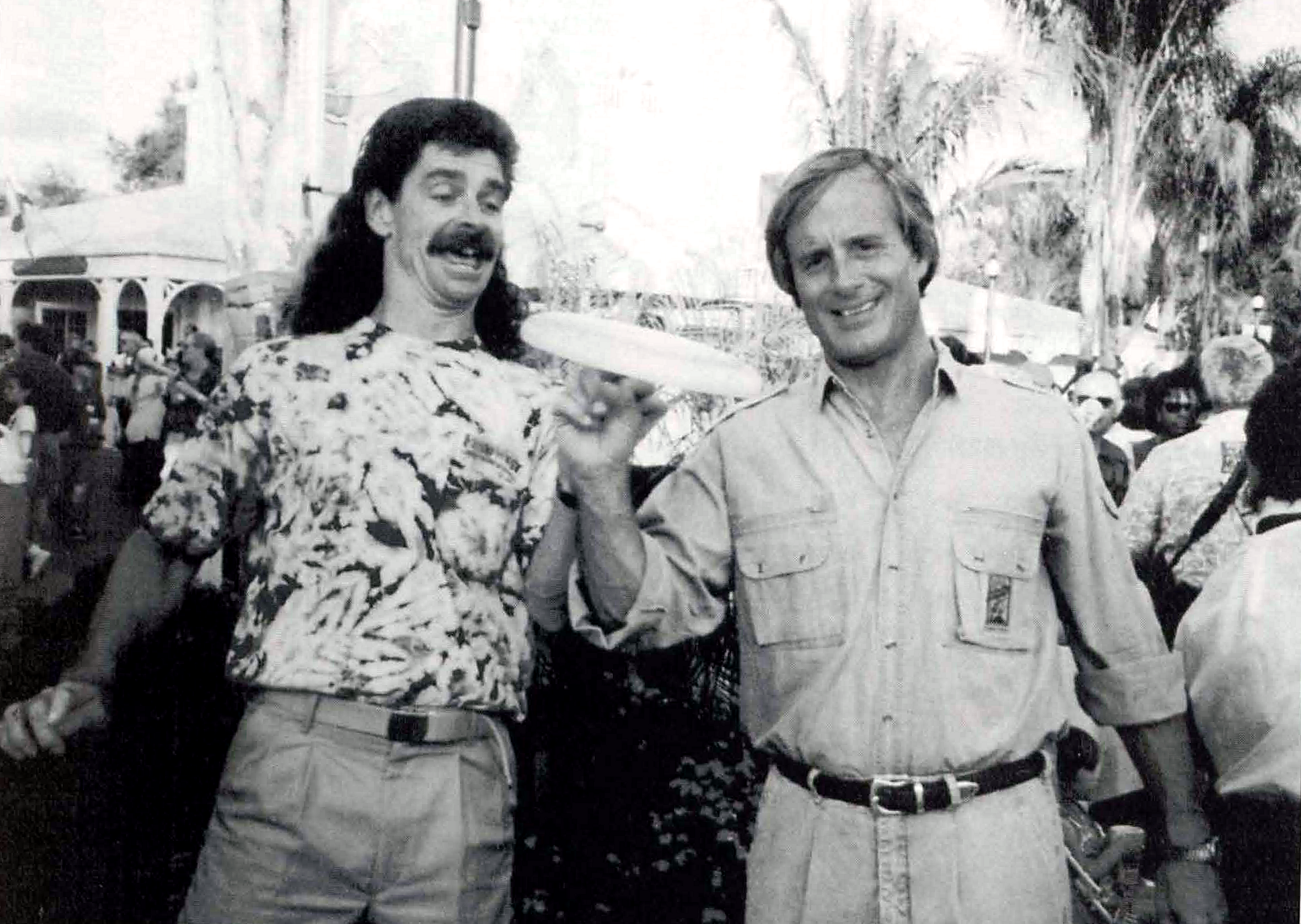
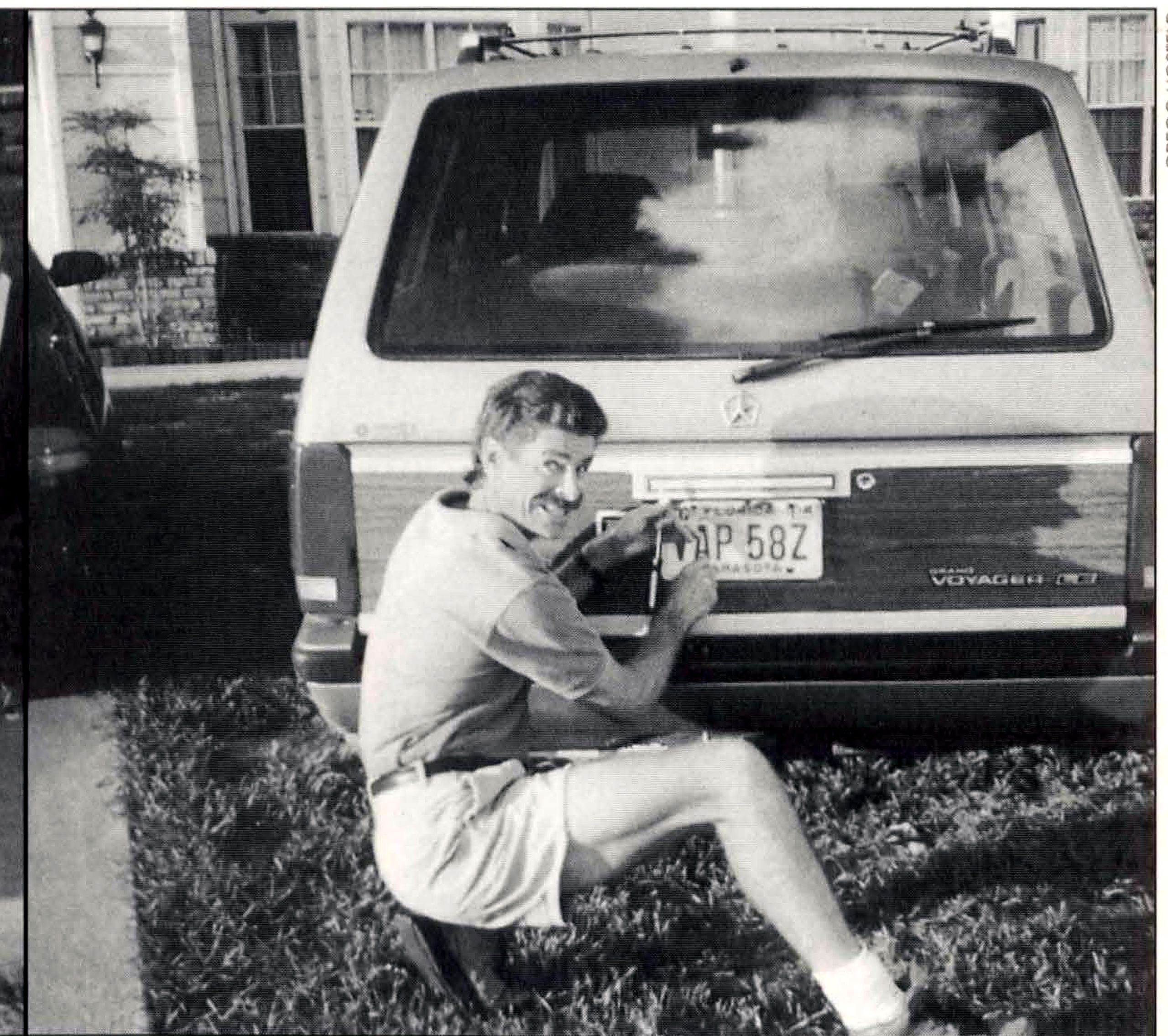
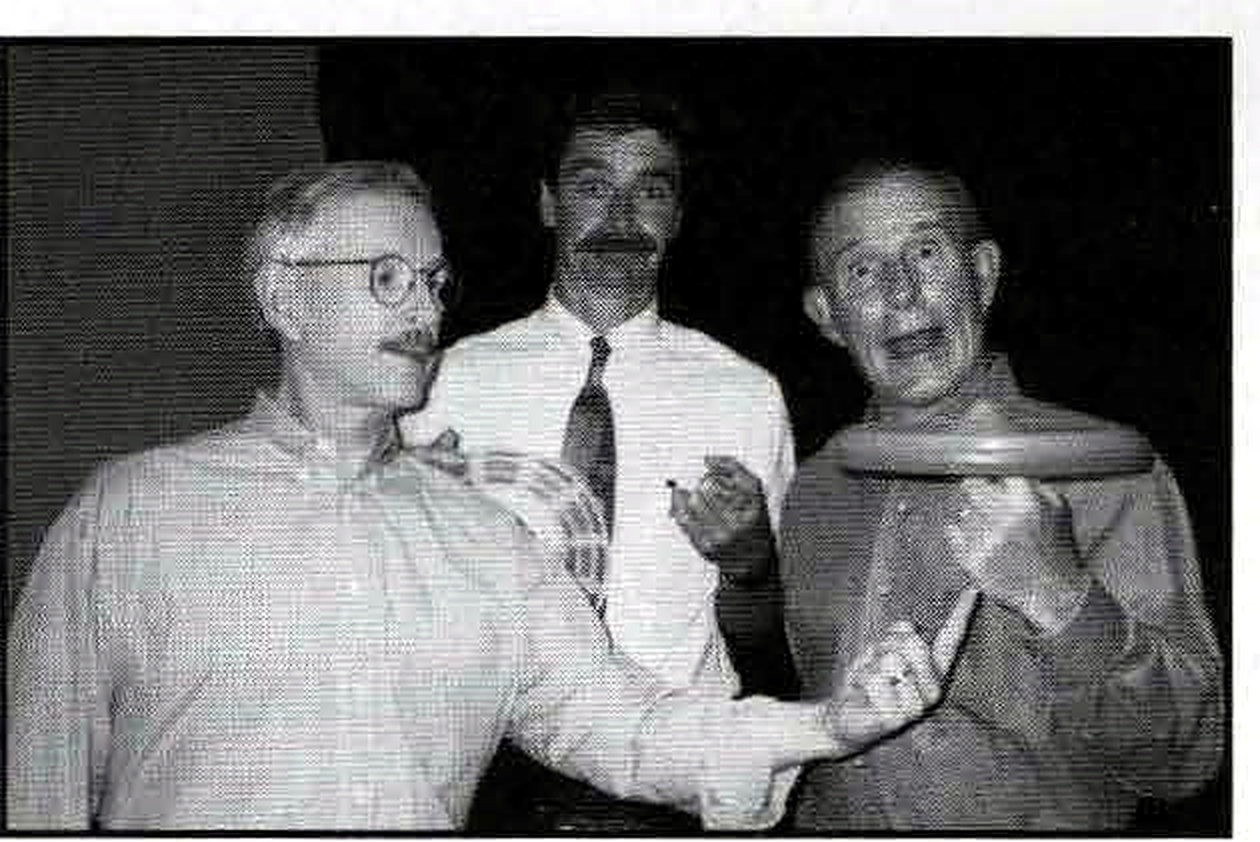
The museum’s induction-disc holdings include Gregg Hosfeld’s recognition. This object connection will bring his biography together with the Hall’s history of commemorative discs. An object photograph and a public catalog link are being prepared.
Consult the museum’s visitor information before planning a visit. Online photographs and collection features do not indicate which objects are currently on display.
The Watson brothers’ Sarasota Sharks halftime show in 1976 led Hosfeld into Sarasota’s Ultimate community. He played with Sarasota Ultimate in 1977–1978 before continuing with teams in Orlando. His friendships with Jeff Watson and Tim Willis connect his international career to Sarasota’s early community of Ultimate players, overall competitors, freestyle players and golfers.
His Florida legacy also lives in the landscape: North Water Tower Park, the original Gran Canyon and a later portfolio of public-park courses. The 2009 WFDF Disc Golf gold medal in Jacksonville adds a world championship earned in his home state to that story.
Story in Development
Jeff Watson’s Ultimate connections in Sarasota, including the Watson brothers and Gregg Hosfeld’s recollections of joining practice.
Story in Development
Jeff Watson, Gregg Hosfeld, and Tim Willis: the Sarasota connections within Florida’s Class of 2022.
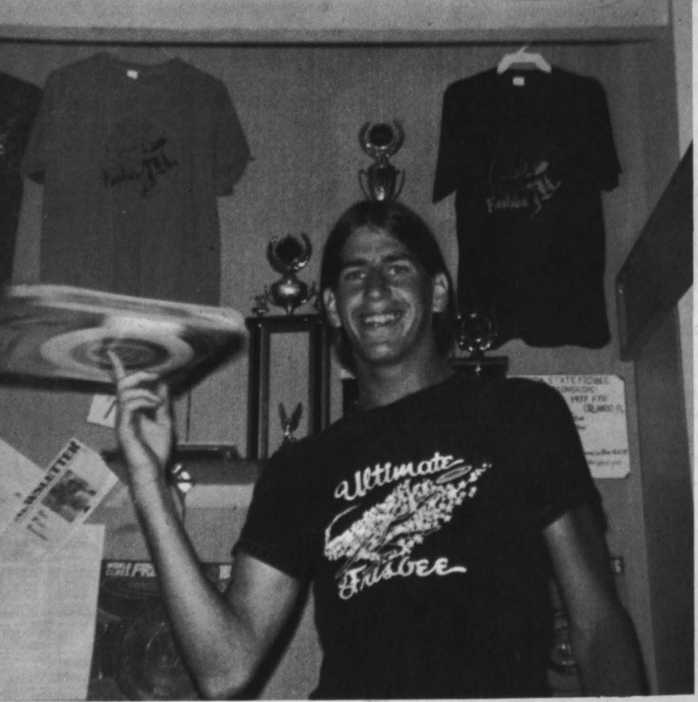
Jeffrey Allen “JAWs” Watson carried Sarasota’s all-around disc tradition to world titles in 1980 and 1983, mentored Gregg Hosfeld, and returned for a successful…
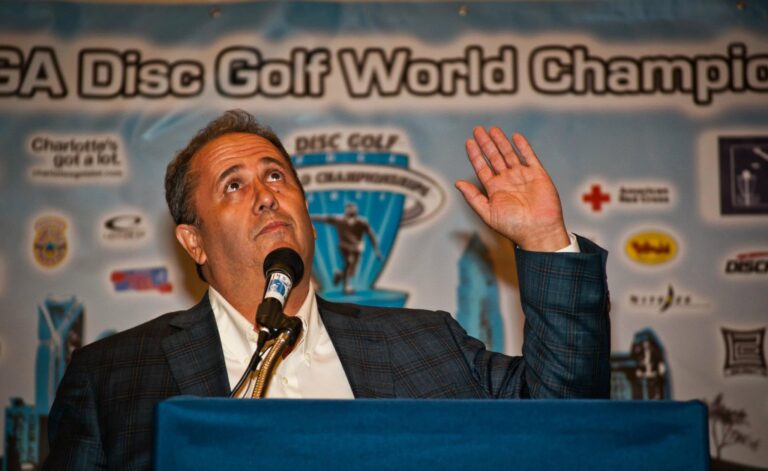
Tim Willis turned an early love of Frisbee into decades of work for the people who played it.