A short introduction with Frisbee Rob
Kirkland shares his Frisbee story in the interview featured by Ultimate Rob in 2011.
YouTube channel: Frisbee Rob
Visit the MuseumMuseum · Daily 10 a.m.–5 p.m.
Member info: PDGA #100 · IFA #65382
CLASS OF
World Champion
John “FrizWiz” Kirkland’s flying-disc life began in Orlando in 1957. From University of Florida Frisbee to world championships, record throws, and arena demonstrations, his career connects Florida’s earliest recreational play with the growth of organized disc sport.
Biography · Career Record · Video Gallery · Photo Gallery · Museum Exhibit · Florida History · Related People
John “Friz Whiz” Kirkland helped define what a flying-disc athlete could be. An Orlando-born competitor with a background in swimming, he became a champion across the field events, Disc Golf, and Double Disc Court, while bringing creative throwing and catching to audiences far beyond tournament fields. His career connects Florida’s early Frisbee community with the national rise of organized disc sports. [1–5]
His career spans the early Overall era, world-level Disc Golf, field-event records, freestyle demonstrations, and later Double Disc Court championships. Those distinct disciplines explain the breadth of his contribution to flying-disc sport. [3–11]
In his 2023 Florida Hall acceptance account, Kirkland describes himself as a Florida boy, born and raised in Orlando. He dates his first Frisbee play to 1957 and remembers neighborhood friends inventing their own target-golf game around age ten. This was informal childhood play, years before permanent basket courses became familiar; it is not a claim to a formally established course. [16]
He continued playing through high school and during his University of Florida years in the late 1960s. Kirkland remembers little organized Frisbee activity in Florida then. His recollections place the beginning of his disc-sports life in Orlando and Gainesville, before the state developed a substantial tournament scene. [16]
By the early 1970s, disc play was developing several distinct competitive forms. Accuracy tested placement; distance rewarded a long throw; maximum time aloft (MTA) timed a throw that the player caught; throw, run and catch (TRC) measured how far a player could throw and then catch the disc. Overall competitions combined events, asking athletes to be versatile. Kirkland became one of that era’s conspicuous all-around competitors. [1, 3, 4]
Kirkland recalls an Overall event in Miami in 1975 as the first Florida tournament he played. Later records give his return appearances firmer detail. At the May 20–21, 1978 Sarasota IFA North America Series event, directed by P.J. Callender, he tied for third in Open golf, behind Jeff Watson and Michael “Snap” Conger. [16–17]
At Sarasota’s April 26–27, 1980 North American Flying Disc Championship Series event, contemporary results place him second in Open Distance at 93.18 metres and second in Open Freestyle with Nolan Riles. These results show a Florida connection across disciplines, as well as a shared competitive history with Jeff Watson. [18]
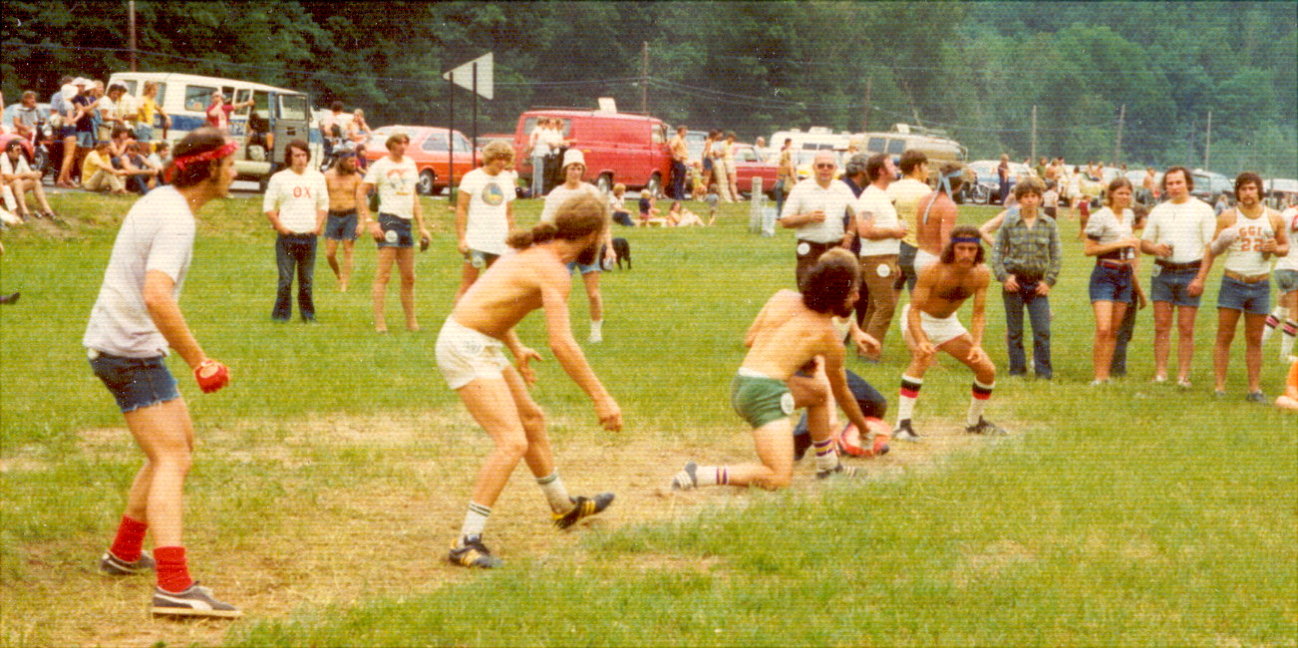
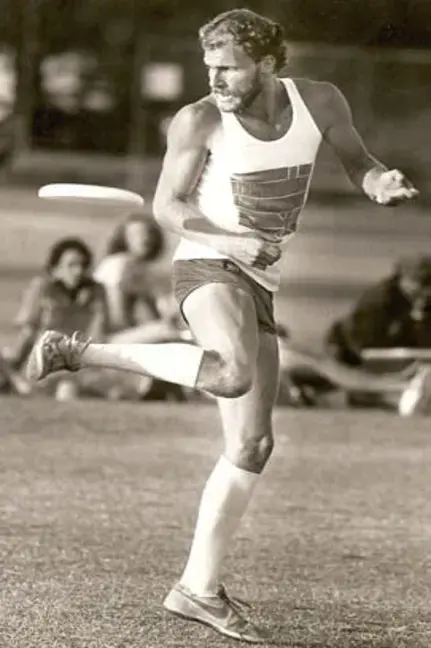
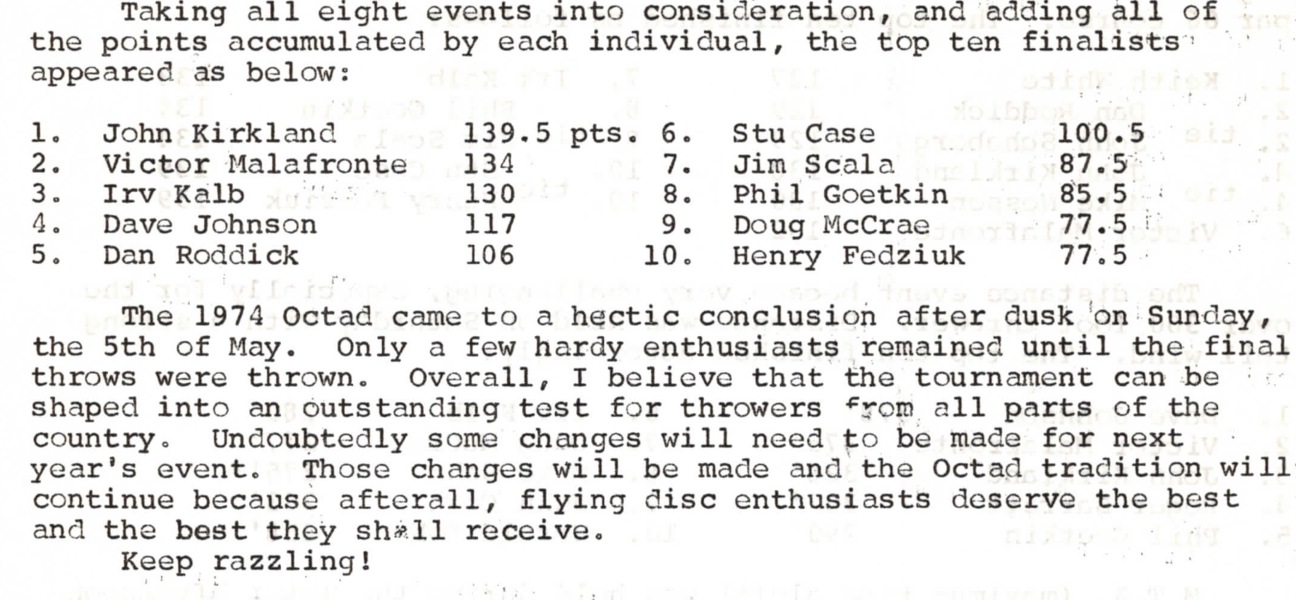
At the 1974 Octad, Kirkland’s range of skills produced an Overall victory. Flying Disc World’s contemporary report totals eight events and places him first with 139.5 points, ahead of Victor Malafronte and Irv Kalb. Its event results list Kirkland first in MTA and TRC. The combined result matters: he could build a winning performance across different tests of throwing and catching. [3]
The distinction between an Overall title and an individual event is essential. Kirkland tied for fourth in the Octad’s golf competition; Keith White won that event. A reader following the PDGA’s historical golf results will therefore see a fourth-place finish without contradicting Kirkland’s Overall championship. His Hall biography needs both parts of the record to explain the achievement accurately. [3, 7]
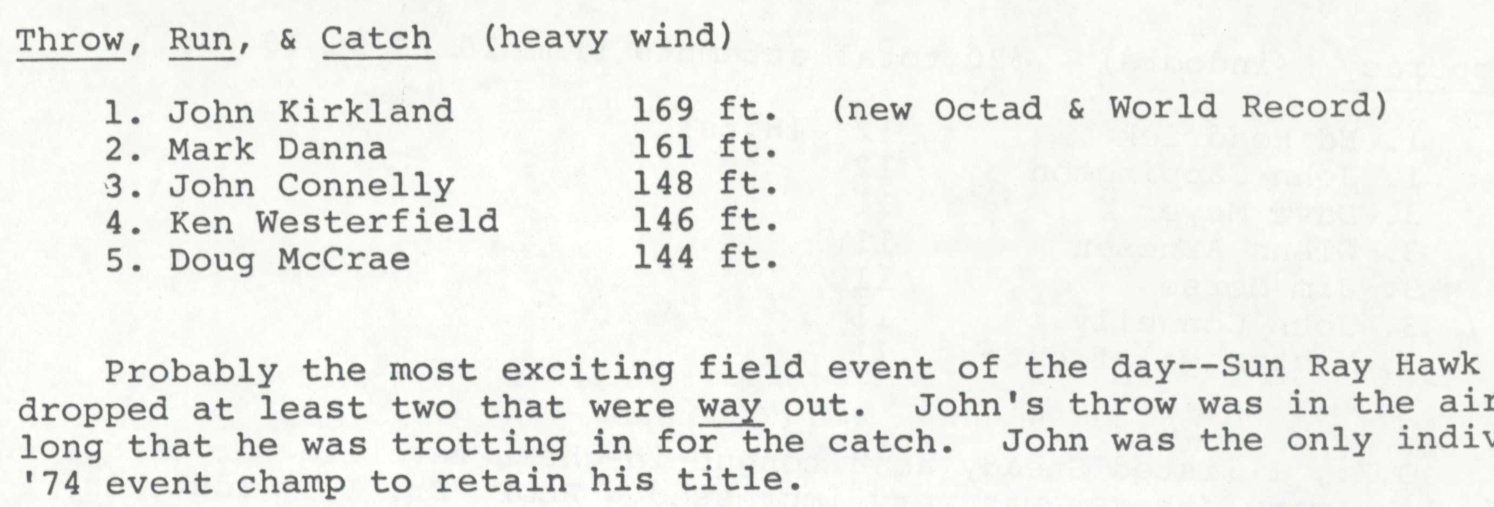
At the 1975 Octad, Kirkland retained the throw-run-catch title. Flying Disc World recorded his 169-foot effort ahead of Mark Danna’s 161 feet and described it as a new world record in heavy wind. Unlike a distance throw, TRC required Kirkland to run down and catch his own disc. [22]
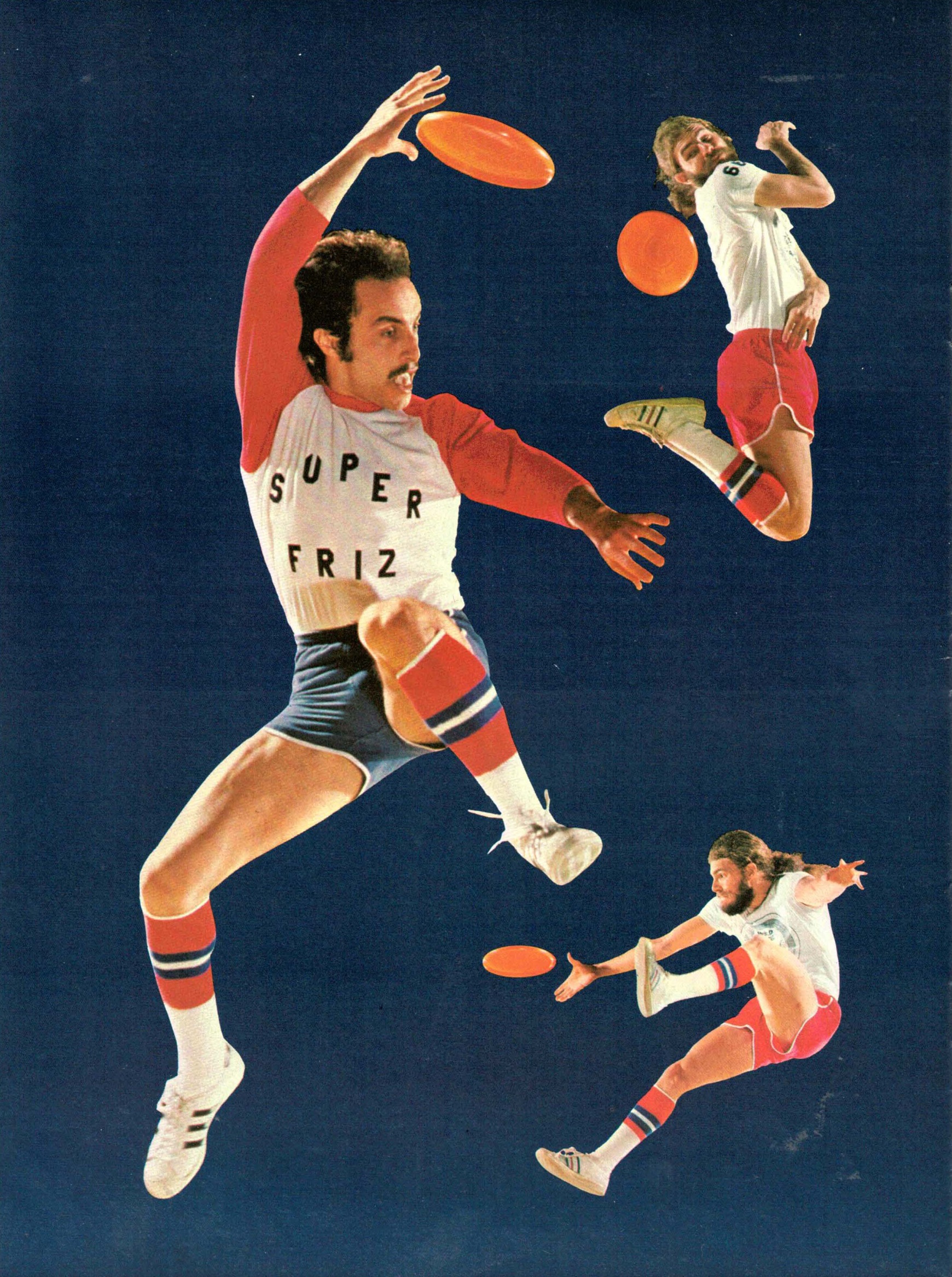
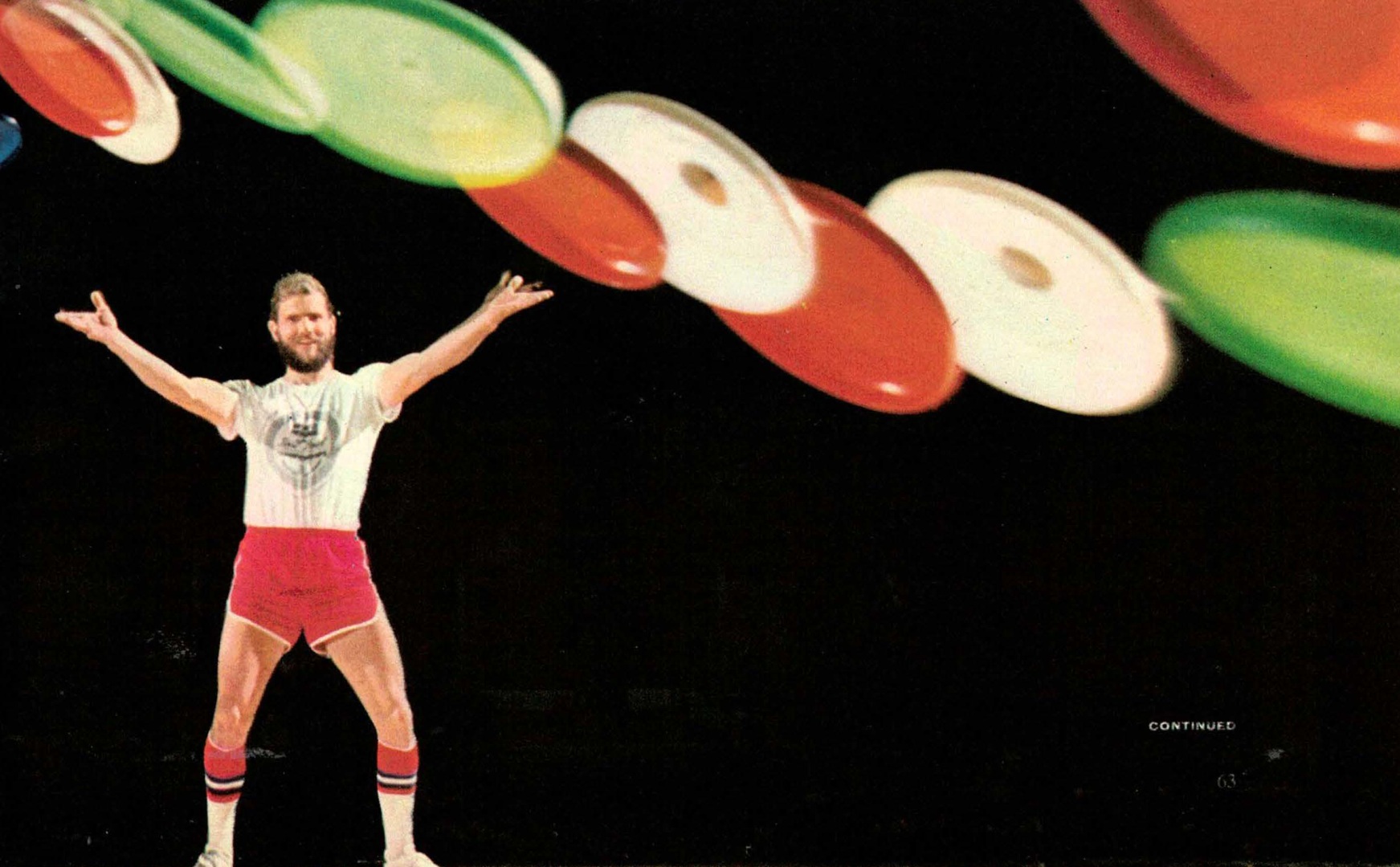
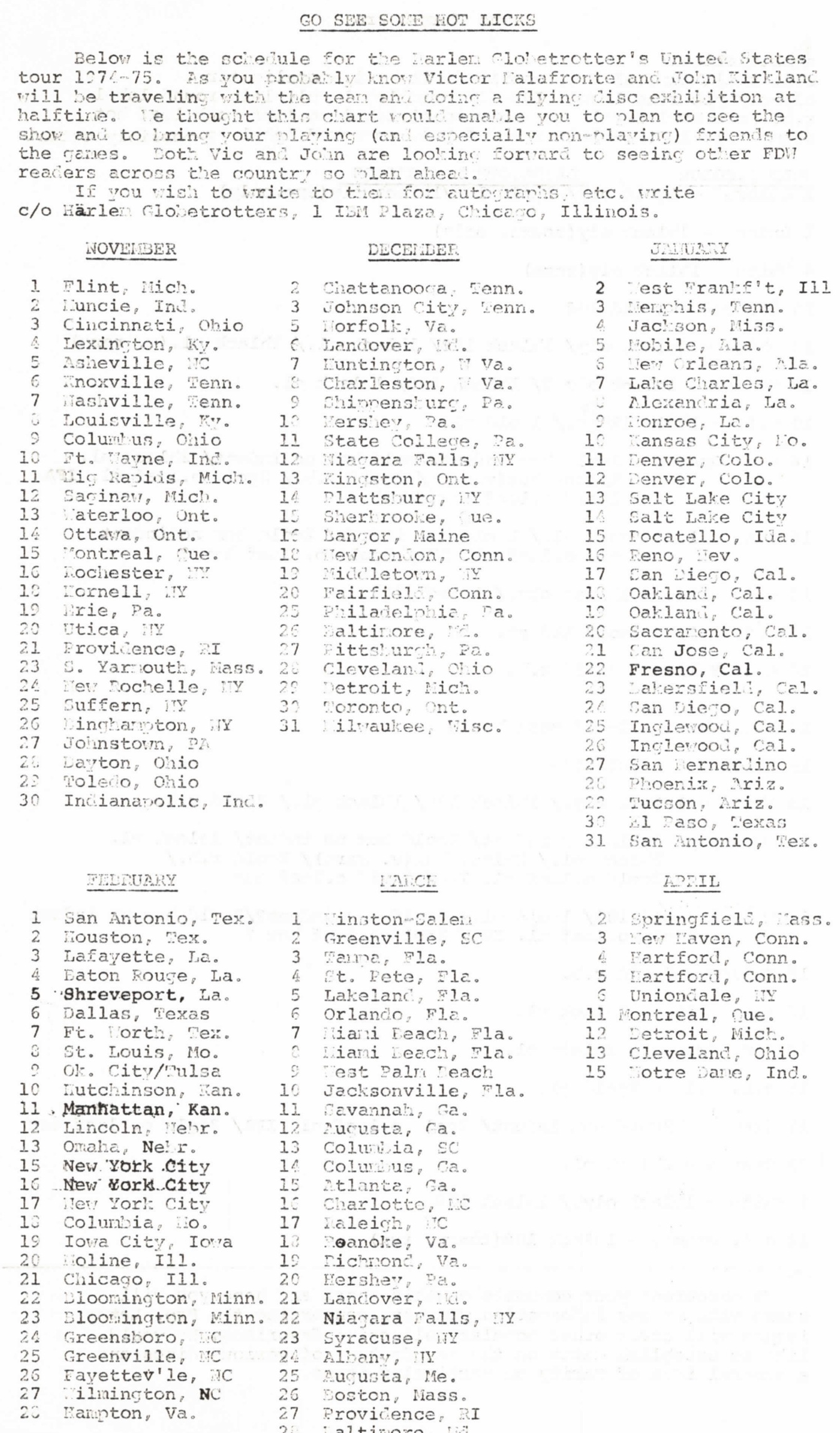
Kirkland and Victor Malafronte also showed what expert disc play could look like as entertainment. The October 1974 Flying Disc World announced their halftime exhibitions on the Harlem Globetrotters’ 1974–75 United States tour and printed a schedule so readers could attend. The notice encouraged players to bring friends who did not already play. It documents a deliberate effort to introduce the sport to a broader audience. [5]
The itinerary included a Florida stretch through cities such as Tampa, St. Petersburg, Lakeland, Orlando, Miami Beach, West Palm Beach, and Jacksonville. For a Florida-born athlete, the tour brought a national performance career back through his home state. The surviving schedule offers a concrete Print Library connection for a future story about how live demonstrations helped people discover flying-disc play. A scheduled stop should be described as such unless evidence of the individual performance is also recovered. [5]
Sports Illustrated brought that performance career to a national readership on February 24, 1975. J. D. Reed’s report describes Kirkland and Malafronte entertaining a Globetrotters audience at Keene State College in New Hampshire; John G. Zimmerman’s demonstration photographs show their airborne catches and disc control. [21]
The public performer and the serious competitor were parts of the same career. Freestyle demanded control and inventive movement; field competition required repeatable execution under pressure. Kirkland’s later recognition by the Freestyle Disc Hall of Fame acknowledges his influence on that developing sport as well as the results recorded in championship tables. [1, 8]
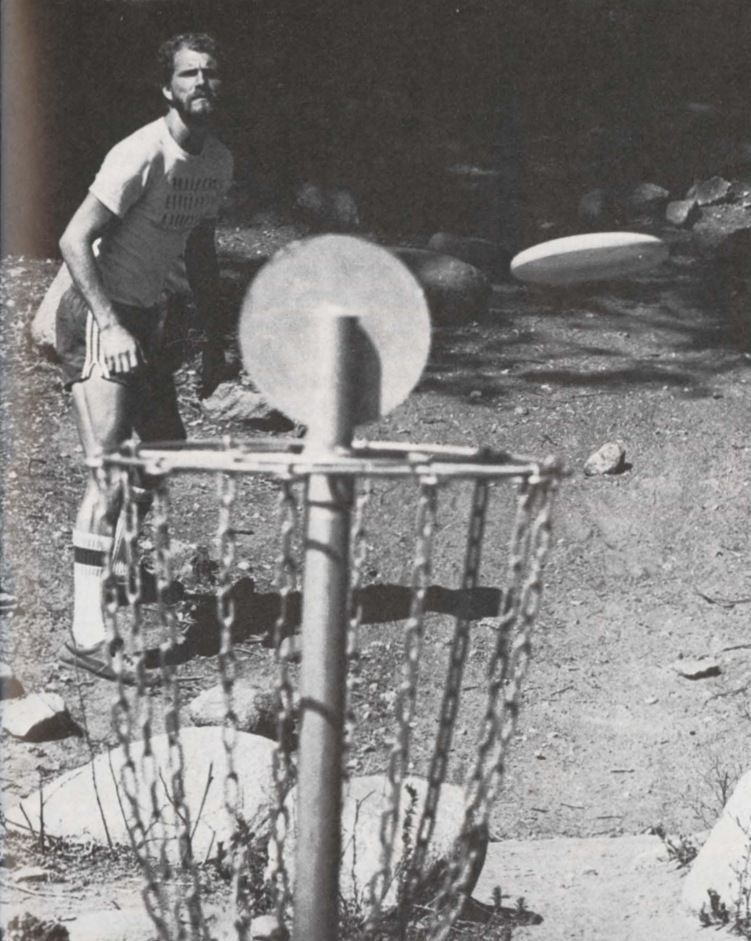
The 1976 World Frisbee Championships brought two individual world titles. Frisbee World records Kirkland’s MTA victory at 10.4 seconds and his golf victory by six strokes over runner-up Ken Westerfield. The PDGA’s historical event record independently confirms that winning margin. These were World Frisbee Championships titles in an era before the modern PDGA World Championships series. [4, 9]
The contemporary account also describes the newly installed golf targets and the demands of the course. That setting makes the golf win an important bridge between early target golf and the basket game familiar to visitors today. The Florida induction account calls Kirkland the first World Frisbee golf champion on Pole Hole baskets; the safer core claim is his verified 1976 WFC golf championship, with the target-history distinction explained alongside the period source. [1, 4]
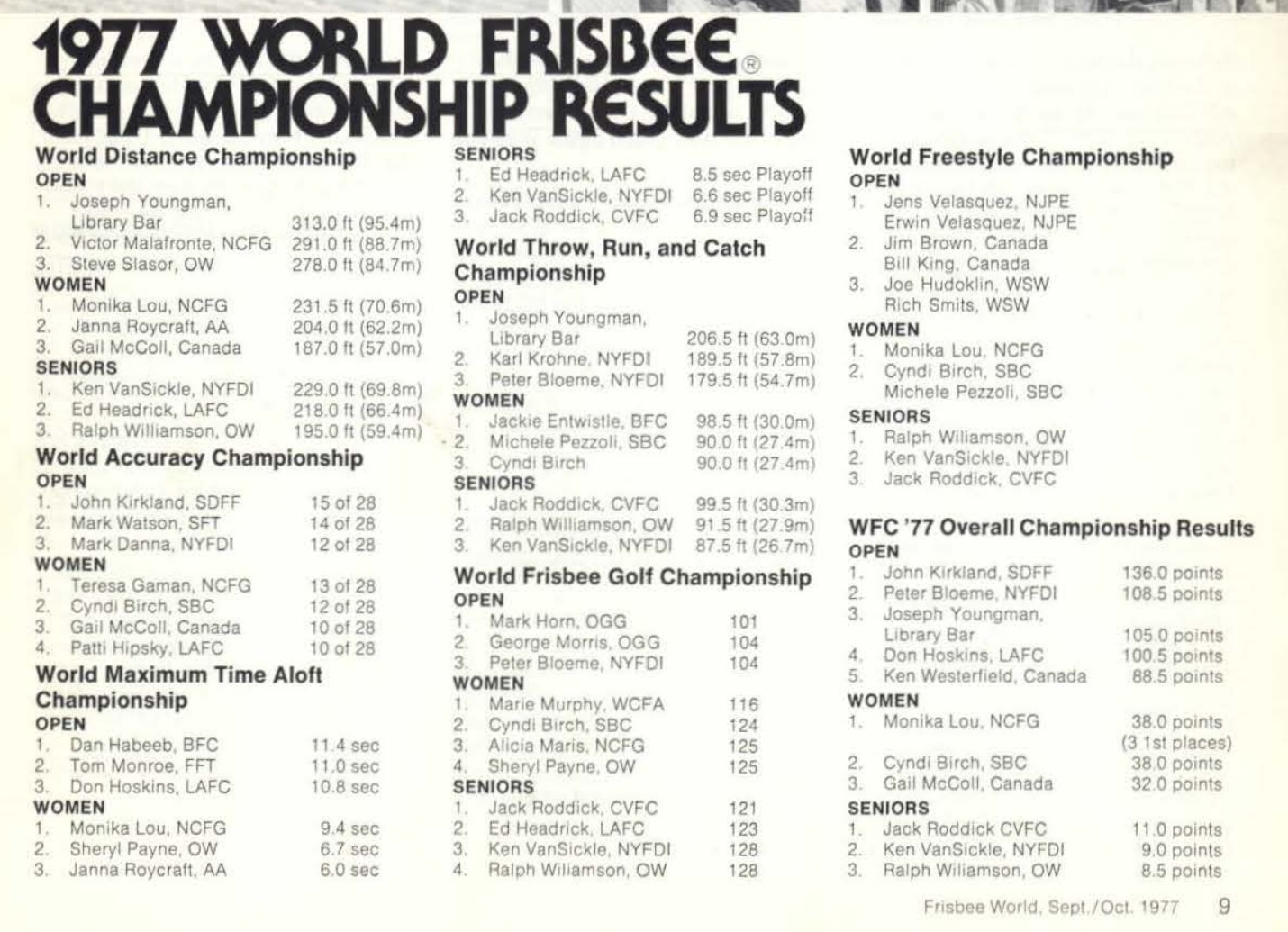
In 1977 he added the World Accuracy and Overall championships. Frisbee World reports an Accuracy finish of 15 hits from 28 attempts, one ahead of Mark Watson, and an Overall total of 136 points. Its narrative describes the Accuracy duel as the result that secured his Overall victory. That close individual contest offers a more vivid account of the title than a list of trophies alone. [10]
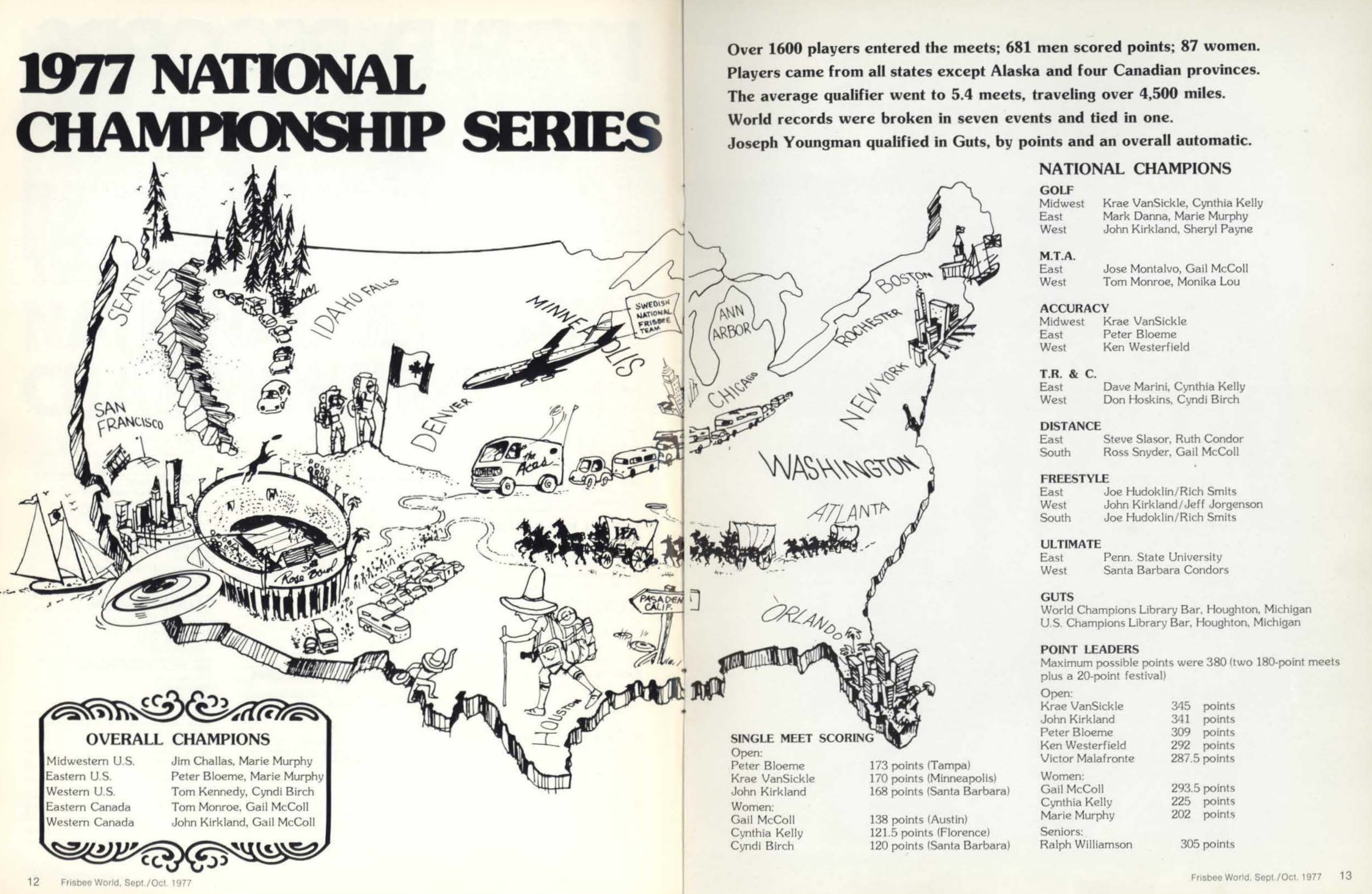
His 1977 world titles were accompanied by national-series successes. The series summary lists him as Western Canadian Overall champion and Western U.S. golf champion. At the Western National Golf and MTA meet in Boulder, July 16–17, he won golf by one stroke over William Nash and won freestyle with Krae Van Sickle. The series summary separately credits him and Jeff Jorgenson as the Western freestyle champions. [10]
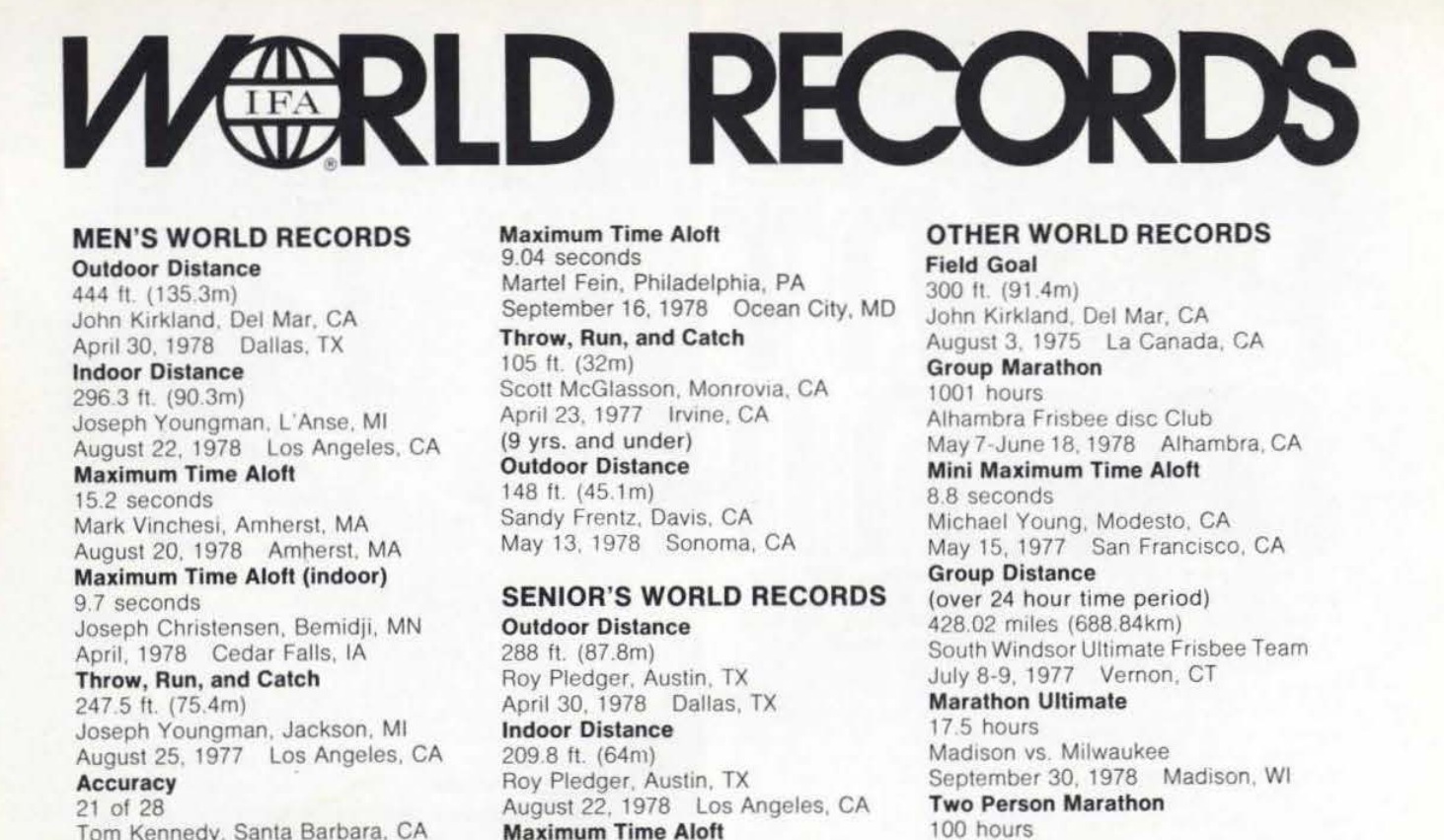
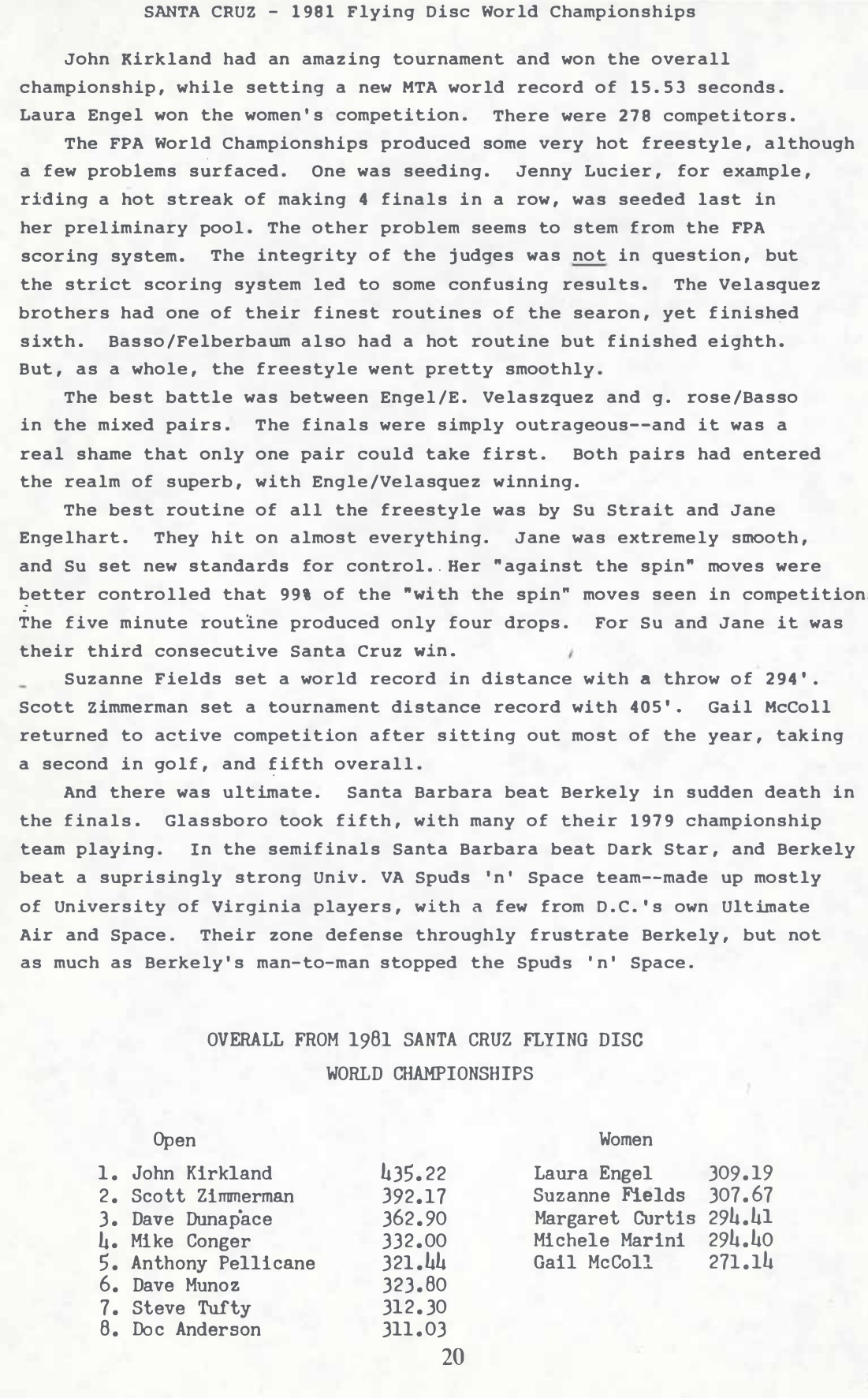
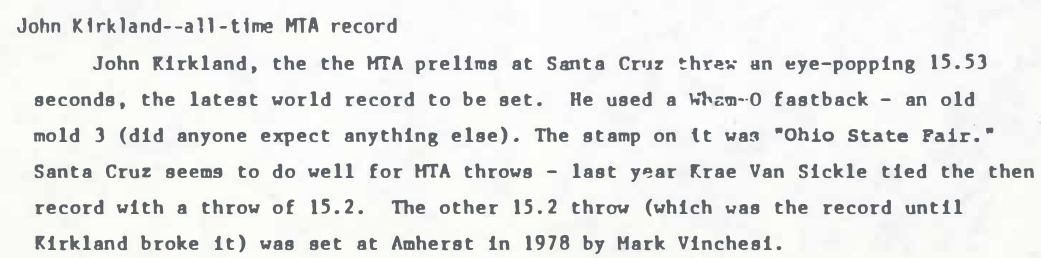
A contemporary Frisbee World record table documents his outdoor distance world record of 444 feet (135.3 metres), set in Dallas on April 30, 1978. In 1981, Frisbee News reported his Overall victory at the Flying Disc World Championships in Santa Cruz and an MTA world record of 15.53 seconds. Distance measures the throw; maximum time aloft measures a self-caught flight. The two figures represent different skills and separate records. [19–20]
In the account preserved for his Florida induction, Kirkland says he moved from Frisbee to ball golf after 1981 and returned to disc sports in 1995 at Dan “Stork” Roddick’s encouragement. His return opened another substantial competitive chapter. The Double Disc Court champions archive lists Open wins with John Greensage in 2001 and 2003, then a 2010 WFDF DDC title with Cody Kirkland. [1, 11]
The later DDC titles underline the importance of partnership in this phase of Kirkland’s career. He won with John Greensage in 2001 and 2003, and with Cody Kirkland in 2010. The champions archive records the winning pairs separately; it does not imply one partner throughout those years. [11]
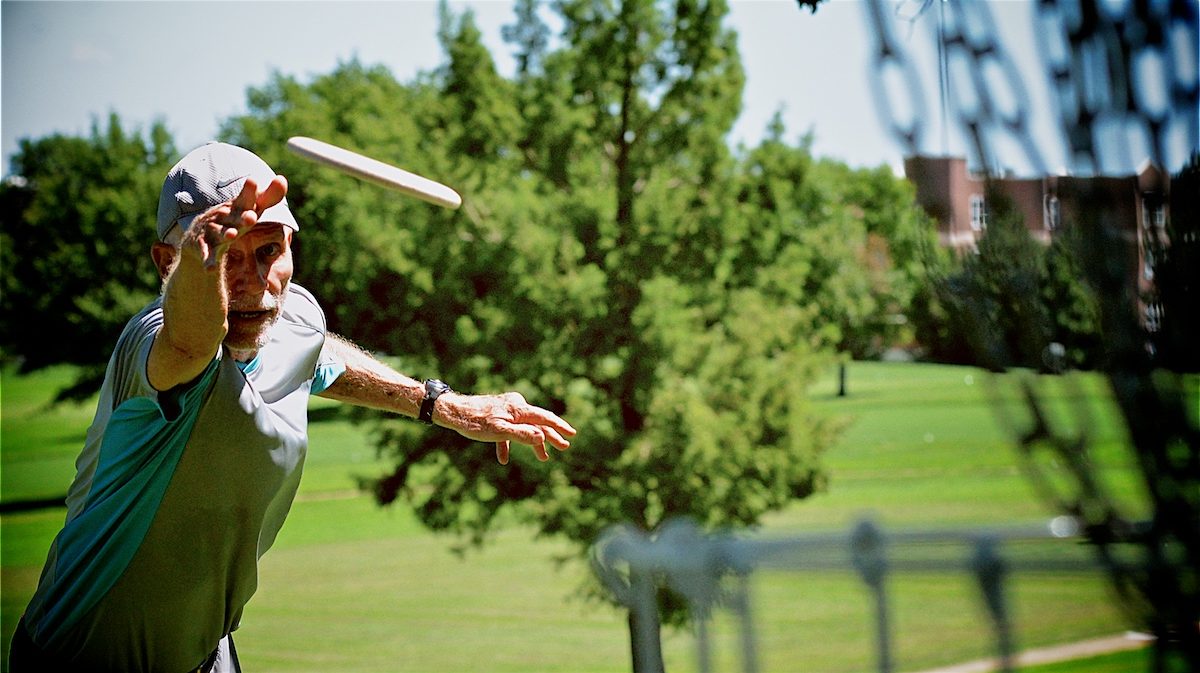
In 2016, four decades after his WFC golf win, Kirkland won the Legends division at the PDGA Professional Disc Golf World Championships in Emporia, Kansas. He finished at 23 over par across four rounds and the final nine, winning by four strokes over runner-up Michael Gates. The event used the division label MPL · Legends; the Hall’s later summary describes it as MP70. Identifying the historical division name keeps the two descriptions understandable. [6]
That same year he was included in the inaugural Freestyle Disc Hall of Fame class. The FPA’s announcement places him among the players recognized for their influence beginning in the pivotal 1975 period. The Florida induction followed in 2023, recognizing a career whose reach crossed disciplines, locations, and generations. [1, 8]
Selected verified world titles are listed below. WFC titles, WFDF DDC championships, and PDGA age-division Worlds are distinct events and formats.
| Year | Event / body | Discipline / division | Format / result |
|---|---|---|---|
| 1976 | World Frisbee Championships (IFA) | Disc Golf · Open | Champion; won by 6 strokes over Ken Westerfield [4, 9] |
| 1976 | World Frisbee Championships (IFA) | MTA · Men | Individual; 10.4 seconds [4] |
| 1977 | World Frisbee Championships (IFA) | Overall · Open | Individual; 136 points [10] |
| 1977 | World Frisbee Championships (IFA) | Accuracy · Open | Individual; 15/28 [10] |
| 1981 | Flying Disc World Championships, Santa Cruz | Overall · Open | Individual champion [20] |
| 2001 | WFDF championship | Double Disc Court · Open | Pairs; John Greensage [11] |
| 2003 | WFDF championship | Double Disc Court · Open | Pairs; John Greensage [11] |
| 2010 | WFDF DDC championship | Double Disc Court · Open | Pairs; Cody Kirkland [11] |
| 2016 | PDGA Professional Worlds | Disc Golf · MPL Legends | Champion; +23, won by 4 strokes over Michael Gates [6] |
1974 — Octad Overall champion across eight events; tied fourth in the separate golf competition. [3, 7]
1974–75 — Harlem Globetrotters halftime exhibition tour with Victor Malafronte, documented by the contemporary tour notice. [5]
1975 — Octad throw-run-catch champion; his 169-foot self-caught throw was reported as a new world record. [22]
1977 — Western Canadian Overall and Western U.S. golf champion in the National Championship Series; Western freestyle champion with Jeff Jorgenson. [10]
1978 — Outdoor distance world record: 444 feet (135.3 metres), Dallas, April 30. [19]
1981 — Overall champion at the Flying Disc World Championships in Santa Cruz; MTA world record of 15.53 seconds, reported by Frisbee News. [20]
1980 — Elected to the Frisbee disc Hall of Fame, as reported in Frisbee World. This is separate from the later Freestyle and Florida honors. [12]
2016 — Inaugural Freestyle Disc Hall of Fame inductee. [8]
2023 — Florida Hall of Fame inductee. [1]
Kirkland’s career helps explain why a flying-disc Hall should tell a broader story than Disc Golf alone. He competed across events, performed for arena audiences, and returned to win in both a partner discipline and an age-based golf division. The contemporary record shows a sport being built through tournaments, shared techniques, publications, and demonstrations—and a player participating in several of those developments. [3–6, 8, 11]
His signature discs give that history a material form. A championship could become a name on an object that other people bought, threw, and collected. Read together, the competition report, the photograph, and the disc connect an athlete’s performance with the equipment and popular culture of the period. They also offer different entry points: visitors may recognize a disc before they know the person whose name appears on it. [10, 13]
| Year | Event | Discipline | Result |
|---|---|---|---|
| 1978 | Sarasota · IFA North America Series | Open golf | Tied 3rd [17] |
| 1980 | Sarasota · North American series | Open distance | 2nd · 93.18 metres [18] |
| 1980 | Sarasota · North American series | Open freestyle | 2nd · with Nolan Riles [18] |
The 1978 golf standings and 1980 distance and freestyle standings are separate results from different events. They complement the national and world championships above. Explore Kirkland’s official PDGA record.
Kirkland shares his Frisbee story in the interview featured by Ultimate Rob in 2011.
YouTube channel: Frisbee Rob
Nate Doss and Terry Miller talk with Kirkland in Episode 06. This extended conversation offers an oral-history companion to his competitive record.
YouTube channel: The Out of Production Podcast
PDGA Radio — September 13, 2023, Episode 4.49. Grant Zellner and Jennifer Allen welcome Kirkland for stories, advice, and a discussion of flight.
FrisbeeGuru — Episode 93: John Kirkland on the Samurai Warrior. The 2019 conversation explores Disc Golf, Double Disc Court, and his approach to competition.
These uploads preserve performances and competition footage. Period descriptions follow the identified uploads; championship statistics are drawn from the results and publications cited in the career section.
Donny Rhodes and John Kirkland in a routine identified by Gerry Geare as a 1980 Rose Bowl semifinal.
YouTube channel: Gerry Geare
An appearance on The New York Weekend Show, identified by the upload as from the 1970s.
YouTube channel: Frisbee Rob
ESPN coverage identified by the uploader as the 1981 World Frisbee Disc Championships.
YouTube channel: wwhamer
Kirkland and fellow Hall member Tom Monroe in Shane Smith’s 2013 recording.
YouTube channel: Shane Smith
Jake Gauthier’s recording documents Kirkland’s Freestyle Disc Hall of Fame recognition. This is separate from his Florida Hall induction in 2023.
YouTube channel: Jake Gauthier
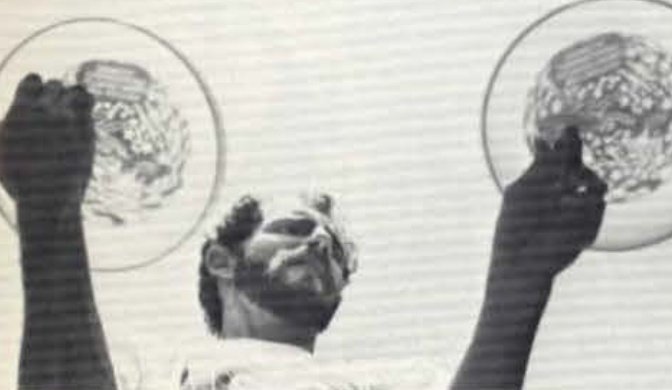
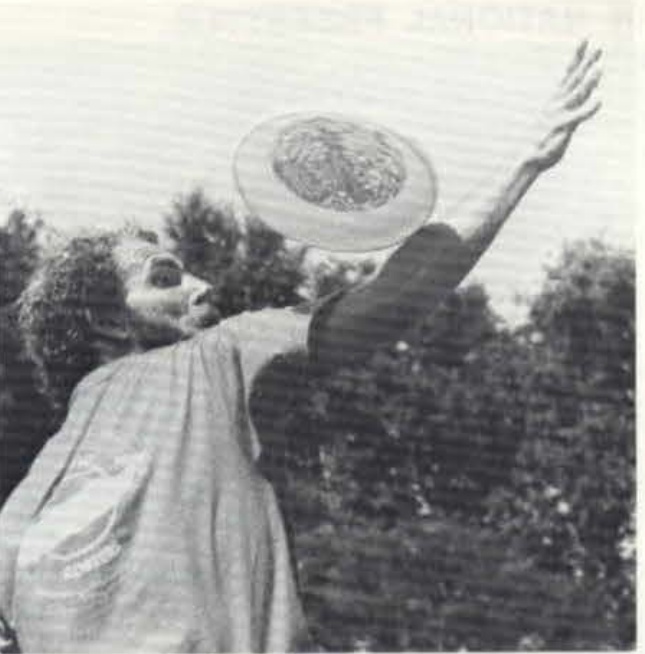
Follow Kirkland’s playing career through action photographs, tournament scenes and contemporary publications. Select an image to explore it with its caption and source credit.
1974–1975 · 1976 · 1977–1981 · 2001–2016 · More from the playing years
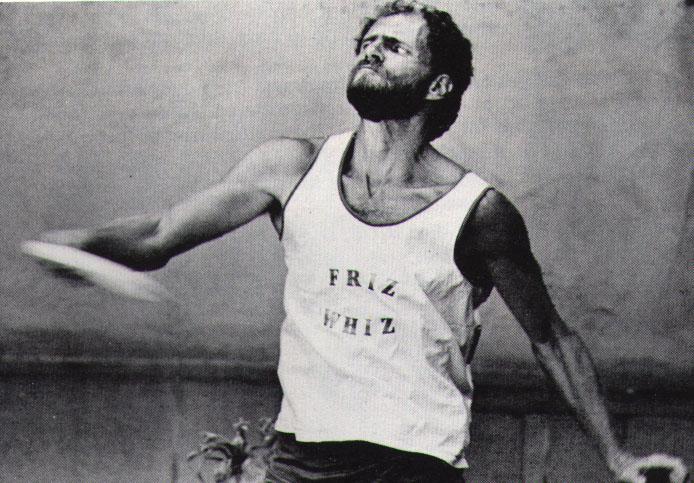
A museum-object feature for John Kirkland is being prepared. His historical photographs and recorded career provide the starting points for connecting the biography with the Florida history exhibition.
Consult the museum’s visitor information before planning a visit. Online photographs and collection features do not indicate which objects are currently on display.
Kirkland’s Florida story begins with his recollections of Orlando childhood play in 1957 and continues through the University of Florida in the late 1960s. It links informal play before an organized scene to the Sarasota competitions of 1978 and 1980, then to his recognition in the Class of 2023. [16–18]
P.J. Callender directed the 1978 Sarasota event. Jeff Watson won its Open golf competition and finished immediately behind Kirkland in the 1980 Sarasota distance results. Tom Monroe shares his Florida Hall class and a career spanning early field events and Disc Golf. These documented connections provide routes through the Hall’s wider history.
Story in Development
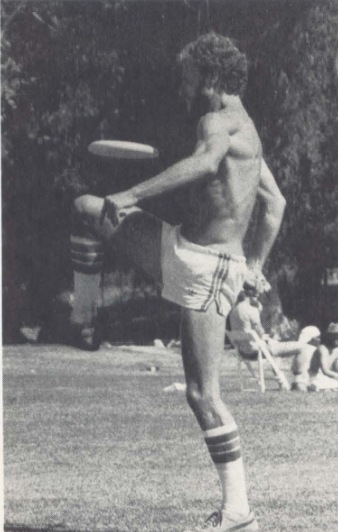
John Kirkland at the 1974 Octad and the range of skills tested in overall flying-disc competition.
Story in Development
John Kirkland’s golf competition at the 1976 World Frisbee Championships, with the event format and title carefully identified.
Story in Development
John Kirkland and Mark Watson in the accuracy competition at the 1977 World Frisbee Championships.
Story in Development
The World Class signature discs, John Kirkland’s connection to the series, and the players represented on the discs.
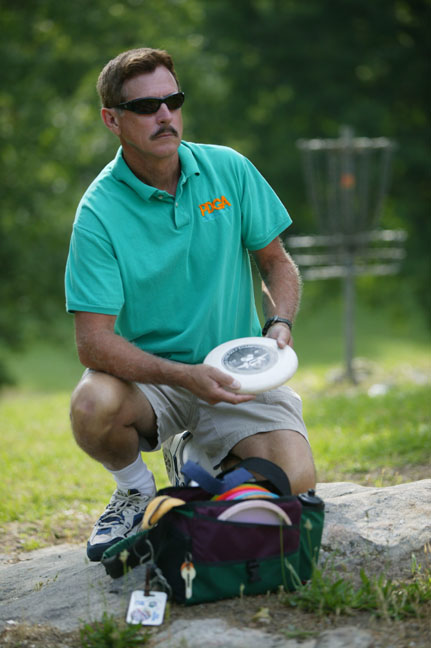
Tom Monroe’s career combined championship competition, tournament direction, promotion, and service to the PDGA.
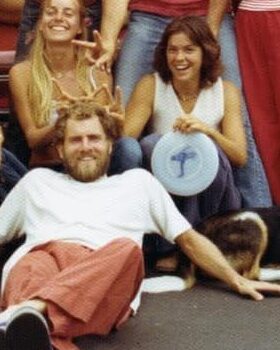
An all-around flying-disc athlete and pioneering Florida organizer, P.J. Callender connected players through the Florida State Frisbee Association, statewide Ultimate activity, and major IFA…
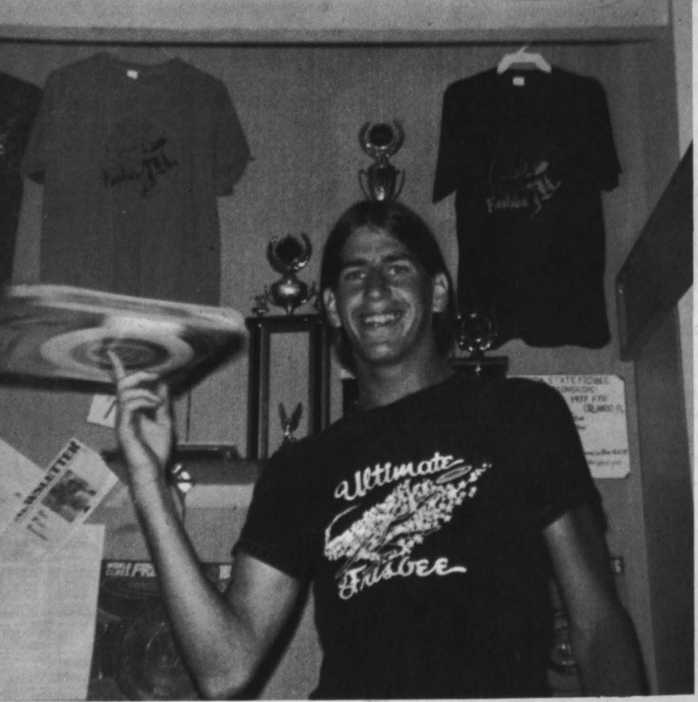
Jeffrey Allen “JAWs” Watson carried Sarasota’s all-around disc tradition to world titles in 1980 and 1983, mentored Gregg Hosfeld, and returned for a successful…